

Key Takeaways
Budget Travel in Eastern Europe
Budget travel in Eastern Europe refers to exploring countries such as Poland, Hungary, Romania, Bulgaria, and the Western Balkans while spending significantly less per day than comparable trips to Western Europe or North America. The region's affordability is structural - rooted in currency differences, lower local wages, and a cost-of-living gap that persists across accommodation, food, and transport. This gap has remained durable even as Eastern European economies have grown.
Several Eastern European countries still use their own national currencies rather than the euro, which compounds the purchasing-power advantage for USD holders beyond what cost-of-living differences alone would produce.
The Structural Reasons Prices Stay Low
Eastern Europe's affordability isn't a temporary quirk or a travel-industry secret waiting to expire. It is grounded in economics. Average wages across much of the region - particularly in the Balkans, Romania, and Bulgaria - remain substantially below Western European levels. Businesses set prices relative to what local customers can pay, so the baseline cost of a restaurant meal, a bus ticket, or a night in a guesthouse reflects a fundamentally different economic environment than Paris or Amsterdam.
Currency is the second structural pillar. Countries like Serbia, North Macedonia, Albania, and Romania use their own currencies rather than the euro. When the US dollar is exchanged into Serbian dinars or Romanian lei, travelers often find that their purchasing power stretches considerably further than the cost-of-living gap alone would suggest. This dynamic doesn't move in lockstep with inflation - it depends on exchange rates - but over many years it has consistently favored dollar-holding visitors.
Understanding what makes a destination genuinely affordable requires looking at all daily cost categories together: accommodation, food, local transport, and entry fees. Eastern Europe scores well across all four, which is rarer than it sounds.
~40-50%
Lower average daily costs vs. Western Europe
Eurostat purchasing-power parity data consistently shows price levels in Bulgaria and Romania running at roughly half the EU average, with other Balkan non-EU countries typically lower still.
Top 5
Lowest price-level index countries in the EU
According to Eurostat's comparative price level indices, Bulgaria, Romania, Hungary, and Poland regularly appear among the EU's most affordable countries for household consumption.
Visa-free
Entry for US passport holders across most of the region
US citizens can enter EU Schengen member states and many non-EU Eastern European countries without a visa for short-stay tourism, reducing trip overhead costs significantly.
Lower Tourism Density Keeps Prices in Check
Western Europe's most popular cities have experienced what economists call demand-driven price inflation. When millions of visitors compete for the same hostel beds, restaurant tables, and museum tickets, prices rise to match demand. Eastern Europe, with notable exceptions like Prague and Krakow, simply hasn't reached that saturation point in most destinations.
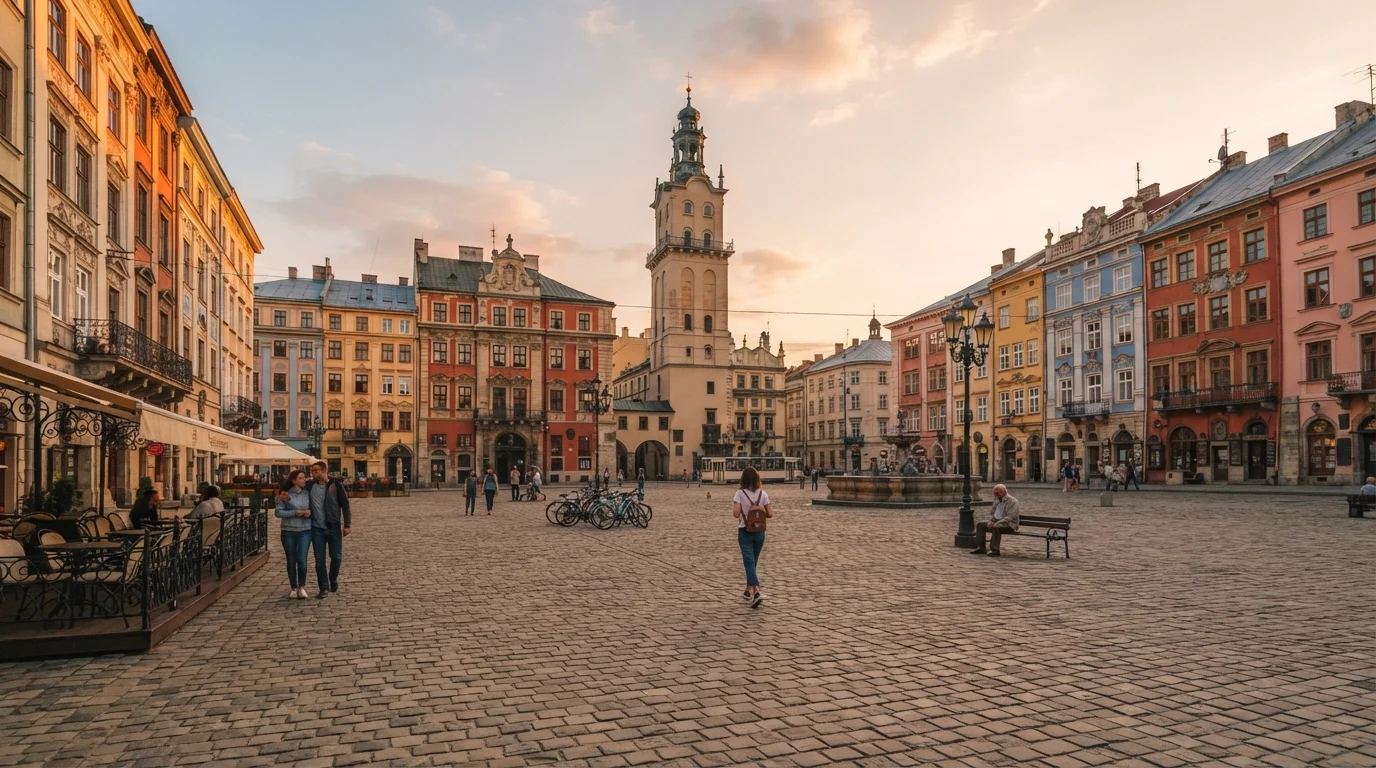
Cities like Plovdiv in Bulgaria, Timișoara in Romania, Lviv in Ukraine (pre-2022), and Skopje in North Macedonia draw a fraction of the visitors that flood Barcelona or Vienna. That lower density means fewer tourist-priced menus, more genuine local markets, and accommodation owners who set rates for a market of actual locals rather than international visitors. The experience also tends to feel less staged as a result.
Tourism pressure does affect specific pockets - Old Town Tallinn and Dubrovnik are examples where popularity has noticeably pushed up costs. But the region overall remains far less saturated than its western counterpart, and dozens of genuinely worthwhile destinations sit well off the main tourist circuits.
How Eastern Europe Compares to Other Budget Regions
Eastern Europe occupies a distinct position among the world's budget-friendly destinations. It isn't the least expensive region on earth - Southeast Asia on a shoestring can still undercut it on raw daily costs in countries like Vietnam or Cambodia. And South America's low-cost destinations offer their own compelling value in countries like Bolivia and Colombia.
What Eastern Europe offers that those regions sometimes don't is a combination of factors: relatively straightforward logistics for US travelers, high-quality infrastructure (trains, roads, and airports that function reliably), visa-free entry for most countries, and cultural and historical depth that rivals anywhere in the world. The trade-off with remote budget destinations - that you pay less but also get less reliability - largely doesn't apply here.
When comparing trip costs honestly, transatlantic airfare is the primary offset. But once on the ground, daily spending in the Balkans or Central Europe typically runs well below what the same trip quality would cost in Western Europe. Frameworks for comparing domestic versus international costs are worth consulting before finalizing any itinerary.
What Budget Travelers Should Still Account For
Affordability doesn't mean free of surprises. Hidden costs can quietly inflate even a well-planned budget trip, and Eastern Europe has its share. City tourist taxes - usually a modest per-night fee collected at check-in - apply in destinations including Budapest, Prague, and Ljubljana. Budget carriers operating within the region frequently charge separately for checked baggage, and those fees accumulate quickly on multi-city itineraries.
Cash handling matters more in parts of Eastern Europe than in Western countries. Some smaller towns, local markets, and rural guesthouses still operate primarily in cash, meaning ATM fees become a recurring line item. Currency exchange rates at airport kiosks tend to be unfavorable; using local ATMs affiliated with established banks generally produces better results, though travelers should confirm their card's foreign transaction fee structure before departure.
Finally, peak summer travel in the most popular cities narrows the affordability gap. Accommodation prices in Krakow or Tallinn in July can approach Western European levels in comparable properties. Traveling in May, September, or October typically restores the cost advantage while still offering reasonable weather across most of the region.
This article provides general travel information for educational purposes. Prices, visa requirements, currency rates, and entry conditions change frequently. Always verify current requirements and costs with official government sources and service providers before booking.