

Key Takeaways
Why Overheating Happens - and Why It Escalates Fast
Your engine generates enormous heat during combustion. The cooling system - a network of coolant, hoses, a radiator, water pump, and thermostat - exists to keep that heat within a safe operating range, typically between 195°F and 220°F. When any part of that system fails or is neglected, heat builds faster than it dissipates, and the engine begins to suffer damage within minutes.
The most common culprits behind overheating include:
- Low or depleted coolant - the fluid (also called antifreeze) that absorbs and transfers heat away from the engine block
- A stuck-closed thermostat - preventing coolant from circulating to the radiator
- A failing water pump - the mechanical heart of the cooling system that keeps coolant moving
- A clogged or leaking radiator - reducing the system's ability to shed heat
- A blown head gasket - allowing combustion gases to enter the coolant passages
High-mileage vehicles are particularly susceptible. If your car has crossed the six-figure odometer mark, routine cooling system inspections become especially important. For a broader look at how to read your vehicle's symptoms systematically, see this practical troubleshooting primer.
Early Warning Signs to Watch For
Catching overheating early is the difference between a minor repair and a major engine rebuild. Train yourself to notice these signals before the temperature gauge pins itself in the red:
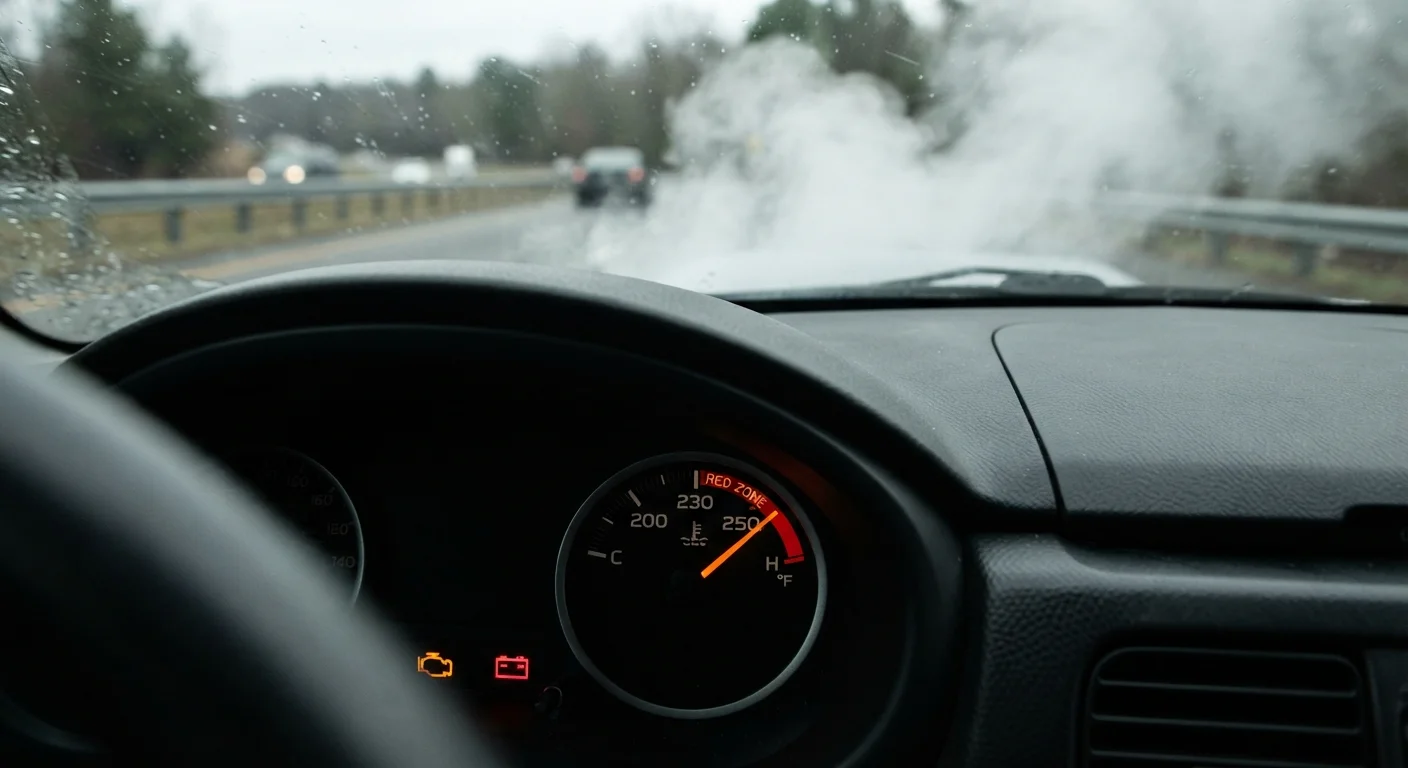
- Temperature gauge creeping toward the red zone - your first and most reliable indicator. Normal operating range sits in the middle of the gauge.
- Sweet or syrupy smell - coolant has a distinctive sweet odor. If you notice it inside or outside the cabin, a leak is likely present.
- Steam or smoke rising from under the hood - visible vapor means coolant is already boiling or contacting hot engine surfaces.
- Heater blowing cold air - counterintuitively, if your cabin heater suddenly stops producing warmth, coolant level may be critically low.
- Warning light illumination - many vehicles have a dedicated coolant temperature warning light. Familiarize yourself with your dashboard; every warning light has a specific meaning worth knowing in advance.
Prevention Costs Far Less Than Repair
Checking your coolant level and condition twice a year - and flushing the system on your manufacturer's recommended interval - is one of the most cost-effective maintenance habits you can build. Coolant degrades over time and loses its ability to prevent corrosion inside the engine block. A $15 coolant top-off today could prevent a $1,500 head gasket repair down the road.
Overheating can also trigger your check engine light. Learn what your check engine light is actually telling you so you can prioritize which alerts need immediate action.
What to Do When Your Temperature Gauge Spikes
Turn off the A/C and turn on the heater
As soon as you notice the temperature gauge rising, switch off the air conditioning - it adds load to the engine. Then turn the cabin heater to maximum heat and fan speed. The heater core acts as a secondary radiator, drawing heat away from the coolant and into the cabin. This can buy you enough time to reach a safe stopping point.
Pull over safely and shut the engine off
Do not push through to your destination. Find the nearest safe place to stop - a parking lot, a wide shoulder - and turn the ignition off. Continuing to drive an overheating engine accelerates damage exponentially. A warped cylinder head or a seized engine can turn a $200 repair into a multi-thousand-dollar job.
Wait at least 30 minutes before opening the hood
Let the engine cool completely before investigating. The cooling system operates under pressure, and a hot radiator cap or hose can release scalding coolant if disturbed. A minimum of 30 minutes is a reasonable waiting period; longer is safer if you have no urgency.
Check the coolant level and look for visible leaks
Once the engine is cool, locate the coolant reservoir - a translucent plastic tank near the radiator with MIN and MAX markings. If the level is low, top it off with the correct coolant type listed in your owner's manual. Then scan the ground beneath the vehicle and inspect visible hoses for cracks, soft spots, or wet residue indicating a leak.
Decide whether to drive on or call for assistance
If the coolant level was low, you topped it off, and no obvious leaks are visible, you may be able to drive cautiously to a nearby mechanic - watching the gauge closely the entire time. If the gauge climbs again quickly, steam returns, or you see active fluid leaking, do not attempt to drive further. Call roadside assistance or arrange a tow. A tow is far less expensive than a destroyed engine.
Overheating Damage Can Be Invisible at First
An engine that has been overheated may seem to run normally once it cools down - but internal damage such as a warped head gasket or microscopic cracks in the cylinder head can develop silently. If your engine overheated significantly, have a mechanic perform a combustion leak test before assuming everything is fine. Catching early gasket damage prevents far costlier failures later.
Once temperatures return to normal and the engine is cool, inspect the coolant reservoir and look under the vehicle for puddles. If you notice white or sweet-smelling exhaust smoke, that can indicate a blown head gasket - a condition that requires professional diagnosis. Exhaust smoke color tells its own diagnostic story and is worth understanding before your next shop visit.
If overheating recurs after a coolant top-off, or if you cannot identify a clear cause, have a qualified mechanic pressure-test the cooling system. Pressure testing reveals leaks that aren't visible to the naked eye and can confirm whether the head gasket is compromised.