

Key Takeaways
Check Engine Light
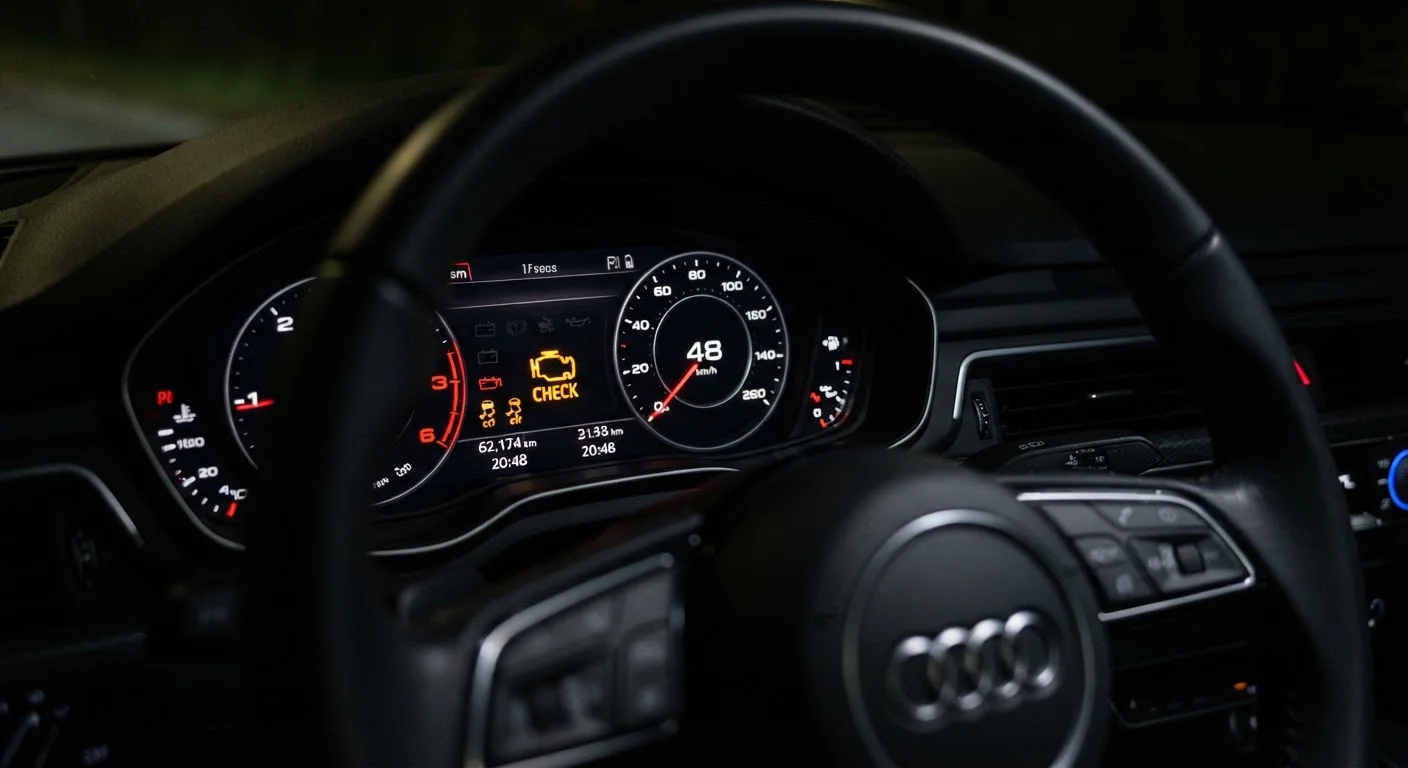
The check engine light - formally called the Malfunction Indicator Lamp (MIL) - is a dashboard warning that your vehicle's onboard diagnostic system (OBD-II) has detected a fault somewhere in the engine, emissions, or drivetrain. It can be triggered by anything from a loose gas cap to a failing catalytic converter. The light itself doesn't tell you what's wrong; it signals that a fault code has been stored and that the system needs to be read with a diagnostic scanner.
All vehicles sold in the US after 1996 are required to use the standardized OBD-II protocol, which stores alphanumeric Diagnostic Trouble Codes (DTCs) that a scanner can retrieve.
What the Light Is - and Isn't - Telling You
The check engine light is not a repair manual - it's an alert. When your vehicle's OBD-II system detects a reading outside its expected parameters, it stores a Diagnostic Trouble Code (DTC) and switches on the light. That code points to a system or circuit, not a specific broken part. Think of it as a smoke alarm: it tells you something needs attention, but it doesn't tell you whether a pot boiled over or there's a structural fire.
The light covers a surprisingly wide range of systems: engine combustion, fuel delivery, the evaporative emissions system (EVAP), oxygen sensors, exhaust, and more. A single illuminated light could represent dozens of different fault codes. That's why the first real step is always retrieving the code - not guessing.
For a broader look at how this fits among other dashboard warnings, the car warning lights reference guide covers every indicator on your dash and what action each one calls for.
Steady vs. Flashing: A Critical Distinction
Not all check engine lights carry the same urgency. Understanding the difference can help you respond appropriately without panic - or dangerous delay.
- Steady light: A continuously lit but non-flashing check engine light signals a fault that has been logged and needs diagnosis, but isn't typically an emergency. You can usually drive the vehicle to a shop, though you shouldn't postpone the visit indefinitely. Unresolved faults can cascade - an ignored oxygen sensor fault, for example, can eventually damage the catalytic converter, turning a modest repair into a significant one.
- Flashing light: A flashing or blinking check engine light indicates an active engine misfire severe enough that unburned fuel is entering the exhaust. This can destroy a catalytic converter in minutes and potentially cause broader engine damage. Reduce your speed, avoid hard acceleration, and get the vehicle to a mechanic promptly. Do not ignore a flashing light.
Watch for Multiple Warning Lights Together
If the check engine light comes on alongside other warning indicators - especially the oil pressure light or temperature gauge - treat the situation as urgent regardless of whether it's flashing. Paired warnings often signal compounding problems. See our article on engine overheating signs for related guidance.
If the check engine light comes on alongside other warning indicators - especially the oil pressure light or temperature gauge - treat the situation as urgent regardless of whether it's flashing. Paired warnings often signal compounding problems. See our article on reading engine overheating signs for related guidance.
Common Triggers (and What They Mean for Your Wallet)
While only a scan can confirm the cause, some fault codes appear far more frequently than others. Knowing the usual suspects helps you have an informed conversation with a mechanic and avoid unnecessary upsells.
~8%
US vehicles with a check engine light on at any time
Industry estimates suggest roughly one in twelve vehicles on US roads has an active check engine light at any given moment, according to automotive data research.
$0-$20
Typical cost to fix a loose or faulty gas cap
A gas cap is one of the most common check engine triggers and among the least expensive to resolve - often requiring only tightening or a simple cap replacement.
$900-$2,500+
Typical catalytic converter replacement cost
According to general repair industry estimates, catalytic converter replacement is one of the costliest check engine-related repairs - and one most often caused by deferred upstream maintenance.
- Loose or faulty gas cap
- Disrupts the EVAP system, which manages fuel vapor. Tighten or replace the cap and the light often clears after a few drive cycles - one of the cheapest fixes possible.
- Oxygen (O2) sensor failure
- O2 sensors monitor exhaust gases to help regulate the fuel-air mixture. A failed sensor reduces fuel efficiency and can damage the catalytic converter if left unaddressed.
- Catalytic converter failure
- Often a downstream consequence of other ignored faults. Catalytic converters are expensive to replace - which is exactly why addressing upstream sensor and spark plug faults early matters.
- Mass airflow (MAF) sensor fault
- The MAF sensor measures incoming air so the engine can meter fuel correctly. A dirty or failing MAF hurts fuel economy and performance. Staying current on air filter replacements helps prevent MAF contamination - something covered in the weekly car check for fuel savings.
- Spark plug or ignition coil issues
- Worn spark plugs or failing coils cause misfires - a leading source of flashing check engine lights. These are generally straightforward repairs when caught early and are part of any standard maintenance schedule. The decoded maintenance schedule guide explains when these intervals typically fall.
Your Next Steps After the Light Comes On
A structured response keeps a small problem from becoming a large bill.
- Note how the car is behaving. Is it running rough, hesitating, or losing power? Any accompanying symptoms narrow the likely cause and help the mechanic - or your own scan - zero in faster.
- Check the gas cap first. Remove it, inspect the seal for cracks, and reinstall it firmly. If it was loose, wait a few drive cycles to see if the light clears before pursuing further diagnosis.
- Retrieve the fault code. Many auto parts retailers offer free code reads. Alternatively, an OBD-II scanner gives you direct access to the stored codes. Our OBD-II code reading walkthrough explains the process step by step.
- Research the code before authorizing repairs. Armed with a DTC - say, P0420 for catalyst efficiency below threshold - you can research typical causes and repair costs, reducing the risk of being overcharged or upsold on unnecessary work.
- Consult a qualified mechanic for diagnosis and repair. Code reading identifies the system involved, but proper diagnosis requires ruling out multiple potential causes. For anything beyond a gas cap tighten, a licensed technician should confirm the fault and perform the repair.
Exhaust-related codes sometimes accompany visible symptoms. If you've noticed unusual smoke from your tailpipe alongside the light, what colored exhaust smoke reveals about your engine can help you interpret what you're seeing.
Emissions Inspections and the Check Engine Light
In most US states, an illuminated check engine light is an automatic failure at an OBD-based emissions inspection. Beyond the repair itself, your vehicle may need several full drive cycles after the fix before all OBD monitors report as 'ready.' If your inspection deadline is imminent, factor in this readiness window when scheduling repairs.