

Why Exhaust Smoke Color Matters
Under normal operating conditions, a properly running engine produces exhaust that's virtually invisible - or briefly white on cold mornings as water vapor condenses. When you start noticing persistent colored smoke trailing your vehicle, that's your engine communicating a problem through one of the few signals visible to the naked eye.
Each smoke color corresponds to a different type of substance burning or leaking inside the combustion system. Identifying the color accurately can help you prioritize urgency, communicate clearly with a mechanic, and avoid letting a manageable issue escalate into a major repair bill. Paired with reading your check engine light, exhaust observation becomes a powerful first-line diagnostic tool.
Blue Smoke: Oil Entering the Combustion Chamber
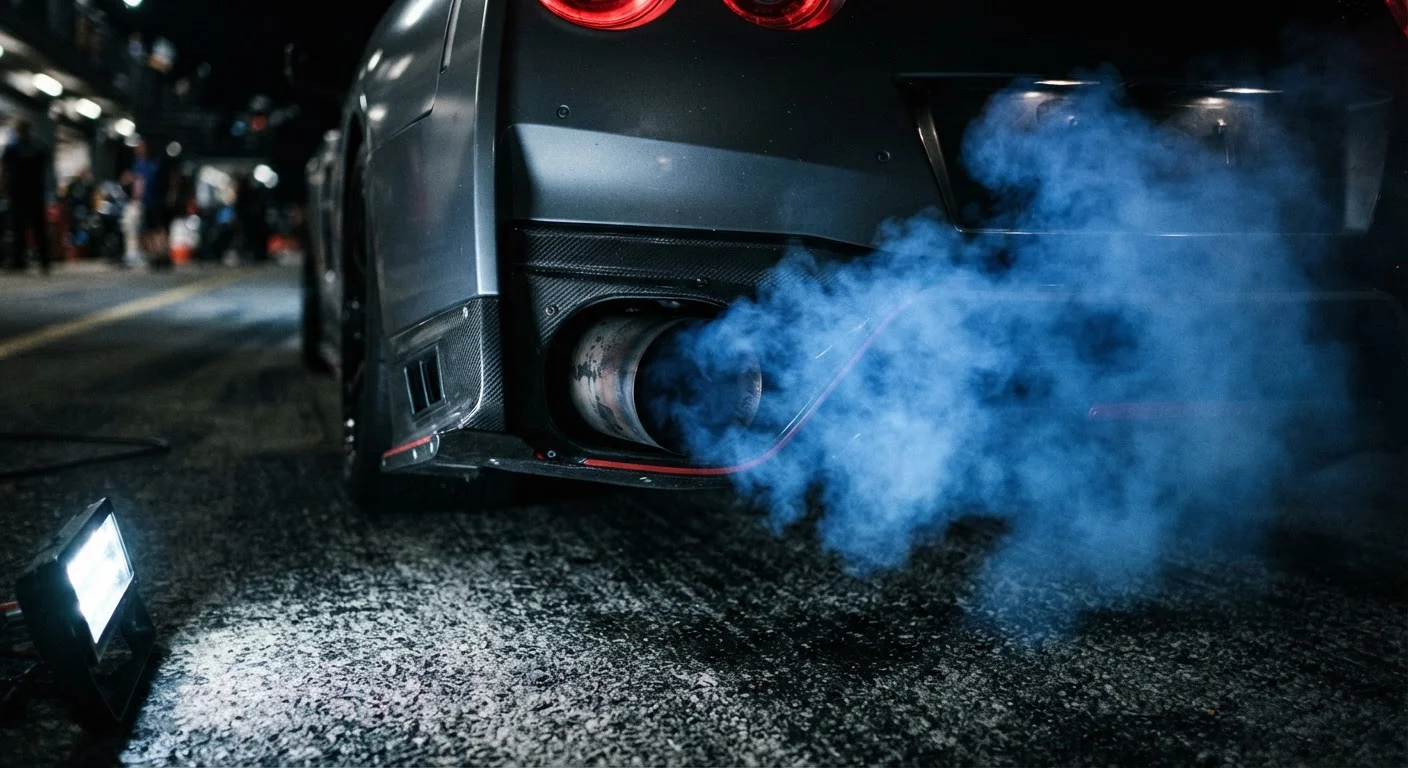
Blue or blue-gray smoke almost always signals that engine oil is being burned along with the fuel-air mixture. Oil isn't supposed to enter the combustion chamber - when it does, it typically means worn piston rings, deteriorated valve stem seals, or a damaged PCV (positive crankcase ventilation) system that regulates crankcase pressure.
You may notice blue smoke most prominently at startup, when oil has pooled overnight, or when decelerating. Ignoring it accelerates wear and can foul spark plugs. Check your oil level regularly; a drop between oil changes is a key secondary symptom. A qualified mechanic should assess the root cause, as the repair range spans from a simple PCV valve replacement to an engine rebuild.
Rich Fuel Mixture
A combustion condition where the ratio of fuel to air is higher than the optimal level. This causes incomplete burning, wasted fuel, and black exhaust smoke.
Head Gasket
A critical seal between the engine block and cylinder head that keeps coolant and oil from mixing with combustion gases. A blown head gasket is a serious and typically expensive repair.
PCV Valve (Positive Crankcase Ventilation)
A small valve that recirculates gases from the crankcase back into the intake manifold. A failed PCV valve can cause excess crankcase pressure, forcing oil into the combustion chamber.
MAF Sensor (Mass Airflow Sensor)
An engine sensor that measures the volume and density of air entering the engine. A faulty MAF sensor can cause the engine to receive an incorrect fuel mixture, often resulting in black smoke.
Valve Stem Seals
Small rubber seals that prevent engine oil from seeping past the valves and into the combustion chamber. Worn seals are a common cause of blue smoke, especially at engine startup.
White Smoke: Coolant or Condensation
Thin, wispy white vapor on a cold morning is normal - it's simply condensation burning off the exhaust system. Thick, persistent white smoke, however, points to coolant entering the combustion chamber, typically caused by a blown head gasket, a cracked cylinder head, or a damaged engine block.
When coolant burns, it produces a distinctly sweet smell alongside the white cloud. You may also notice your coolant reservoir level dropping without an obvious external leak, or your engine running hotter than usual. This is a situation that warrants prompt attention - continued driving can cause severe engine damage. Check for related symptoms using the engine overheating warning signs guide before heading to a shop.
Black Smoke: A Rich Fuel Mixture
Black smoke means the engine is burning too much fuel relative to air - what mechanics call a rich fuel mixture. Common causes include a clogged air filter, a stuck-open fuel injector, a malfunctioning mass airflow sensor (MAF sensor), or a faulty oxygen sensor that's feeding incorrect data to the engine control unit.
Beyond the smoke itself, you might notice poor fuel economy, a strong gasoline smell from the exhaust, or rough idling. Black smoke is more common in older carbureted engines but does occur in modern fuel-injected vehicles when sensors fail. Because a rich mixture wastes fuel and can damage the catalytic converter over time, it's worth diagnosing sooner rather than later. Dashboard clues often accompany this issue - understanding dashboard warning lights can help you connect the dots.
When to Stop Driving and Call a Mechanic
Not every smoke situation demands an immediate roadside stop, but some do. Use this general framework:
- Blue smoke: Monitor oil level closely; schedule a mechanic visit promptly. Avoid prolonged driving if oil consumption is rapid.
- Thick white smoke: Stop driving as soon as safely possible. Continuing risks catastrophic engine damage from overheating or coolant depletion.
- Black smoke: Drivable in the short term, but reduce unnecessary trips and have it diagnosed within a week or two to protect fuel economy and downstream components.
When in doubt, err on the side of caution. Describe the smoke color, its consistency (thin vs. thick), when it appears (startup, acceleration, deceleration), and any accompanying smells to your mechanic - that detail speeds up diagnosis considerably.