

How to Read a Puddle Before You Panic
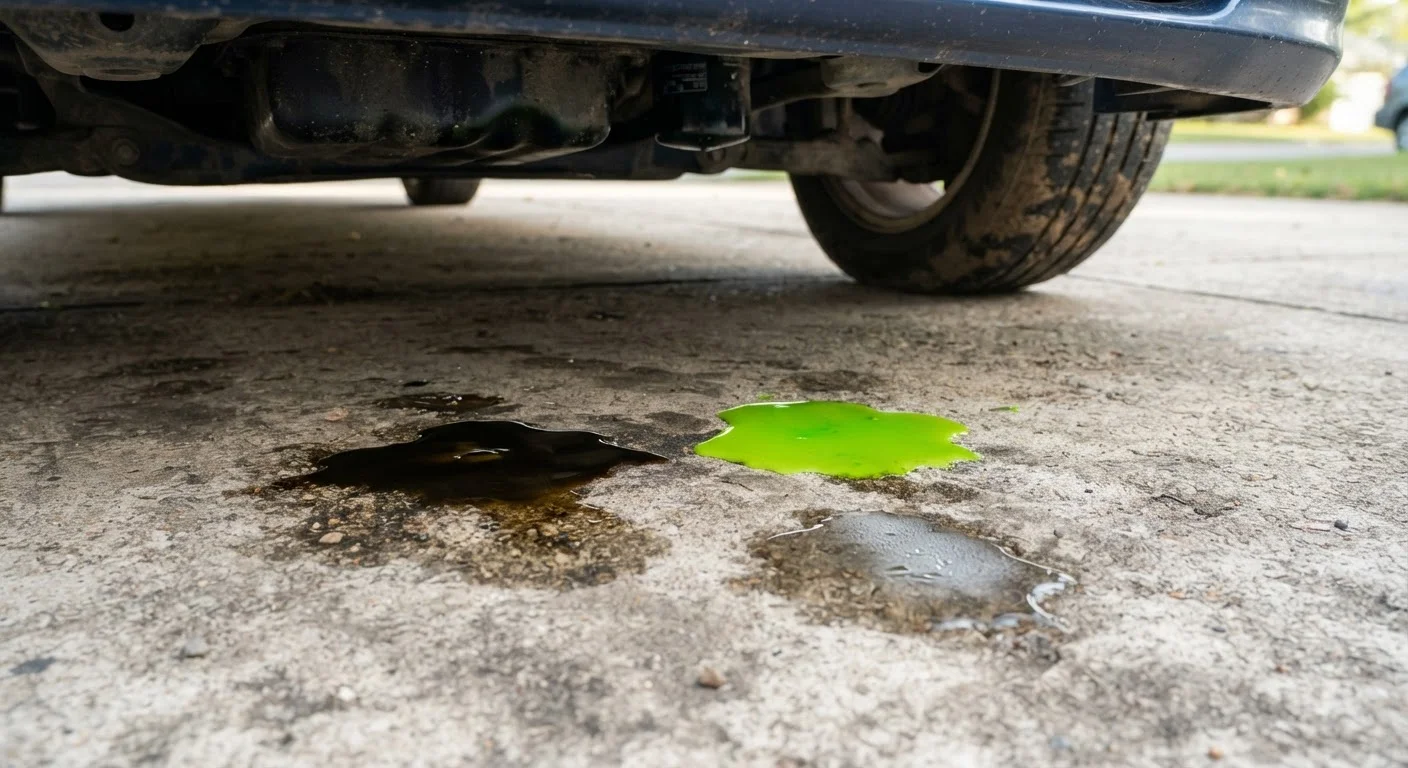
Finding a puddle under your car doesn't always mean disaster, but it does mean something needs attention. Three factors narrow down the culprit quickly: color, location (front, middle, or rear of the vehicle), and texture (oily, watery, slippery). Before you call a shop, crouch down and take a close look - the puddle is telling you something specific.
Keep a few paper towels in your glove box. Dabbing the puddle and comparing the color on white paper gives you a much clearer read than eyeballing pavement. If you're seeing a dashboard warning at the same time, the car warning lights guide can help you cross-reference symptoms.
Fluid-by-Fluid Visual Reference
Use this breakdown to match what you see on the ground to the system most likely responsible.
Engine Oil - Dark Brown or Black, Oily
Engine oil starts amber when fresh and darkens to brown or black with age. It feels slick between your fingers and has a faint burnt smell. Puddles typically appear under the front-center or front-driver's-side area. Small seeps from a worn valve cover gasket may produce only a thin film; a larger puddle suggests a leaking drain plug or oil pan gasket. Oil leaks are rarely safe to ignore - low oil pressure can damage engine internals quickly.
Coolant (Antifreeze) - Bright Green, Orange, Pink, or Blue; Slightly Sticky
Coolant is water-based but has a distinctly sweet smell and a slightly slippery feel. It appears at the front of the vehicle near the radiator or under the engine bay. Color varies by formulation, but any bright, neon-ish puddle with a sweet odor points to coolant. A leaking cooling system can escalate to engine overheating if ignored even briefly.
Transmission Fluid - Red or Dark Reddish-Brown, Oily
Fresh transmission fluid is translucent red; aged fluid turns darker and smells slightly burnt. It typically puddles in the center of the vehicle beneath the transmission. This fluid is critical - running a transmission low causes slipping gears and can lead to expensive rebuild costs.
Brake Fluid - Clear to Light Yellow, Slippery
Brake fluid is nearly colorless when fresh and becomes slightly yellowish as it ages. It has a slightly chemical, glycol-like odor. Leaks appear near wheels (around calipers or wheel cylinders) or near the brake master cylinder under the hood. A brake fluid leak is a safety emergency. Do not drive the vehicle until the brake system has been inspected by a qualified mechanic.
Power Steering Fluid - Reddish or Light Brown, Thin and Oily
Power steering fluid can resemble transmission fluid in color but tends to puddle at the front of the car near the steering rack. Reduced steering assistance is a common accompanying symptom.
Water - Clear, No Odor
A clear, odorless puddle is almost always condensation from the air conditioning evaporator drain - completely normal on humid days. No action required.
Coolant
A liquid mixture (typically water and ethylene glycol) that circulates through the engine to regulate operating temperature. Also called antifreeze, it prevents both freezing and boiling of engine coolant passages.
Brake Master Cylinder
The hydraulic component that converts brake pedal pressure into fluid pressure distributed to each wheel's braking mechanism. A leak here affects braking at all four wheels simultaneously.
Valve Cover Gasket
A rubber or cork seal that sits between the valve cover and cylinder head, preventing engine oil from escaping. It's one of the more common sources of minor oil seeps on older vehicles.
Evaporator Drain
A tube that allows condensed water from the air conditioning evaporator to exit the vehicle. Clear water dripping from beneath the passenger compartment on humid days is normal evaporator drain output.
Transmission Fluid
A specialized hydraulic oil that lubricates and cools the internal components of the transmission. Automatic and manual transmissions typically use different fluid specifications.
Urgency Levels and Next Steps
Not every leak demands an immediate tow, but misjudging urgency is how a minor repair becomes a major one. Use this general framework:
- Drive immediately to a shop (or don't drive at all): Brake fluid leak, large coolant loss, significant oil loss.
- Schedule a repair within a few days: Slow transmission fluid seep, power steering fluid drip, small coolant weep.
- Monitor and confirm: Clear water under the car on a hot day - recheck after your next drive.
Before your appointment, check your fluid levels to understand how much has been lost. If a fluid is critically low, topping it off temporarily can protect the system - but this is not a substitute for repair. For guidance on whether to top off or schedule a full fluid service, see topping off vs. flushing. And if you're new to reading your car's behavior overall, the practical troubleshooting primer offers a solid foundation for systematic diagnosis.
When in Doubt, Don't Drive
If you're unable to confidently identify a leak and your fluid levels appear low, the safest choice is to have the vehicle inspected before driving further. A short drive with critically low brake fluid or engine oil can cause damage or safety hazards that far outweigh the cost of a tow. When in doubt, consult a qualified mechanic.