

Key Takeaways
Steering Pull (Drift)
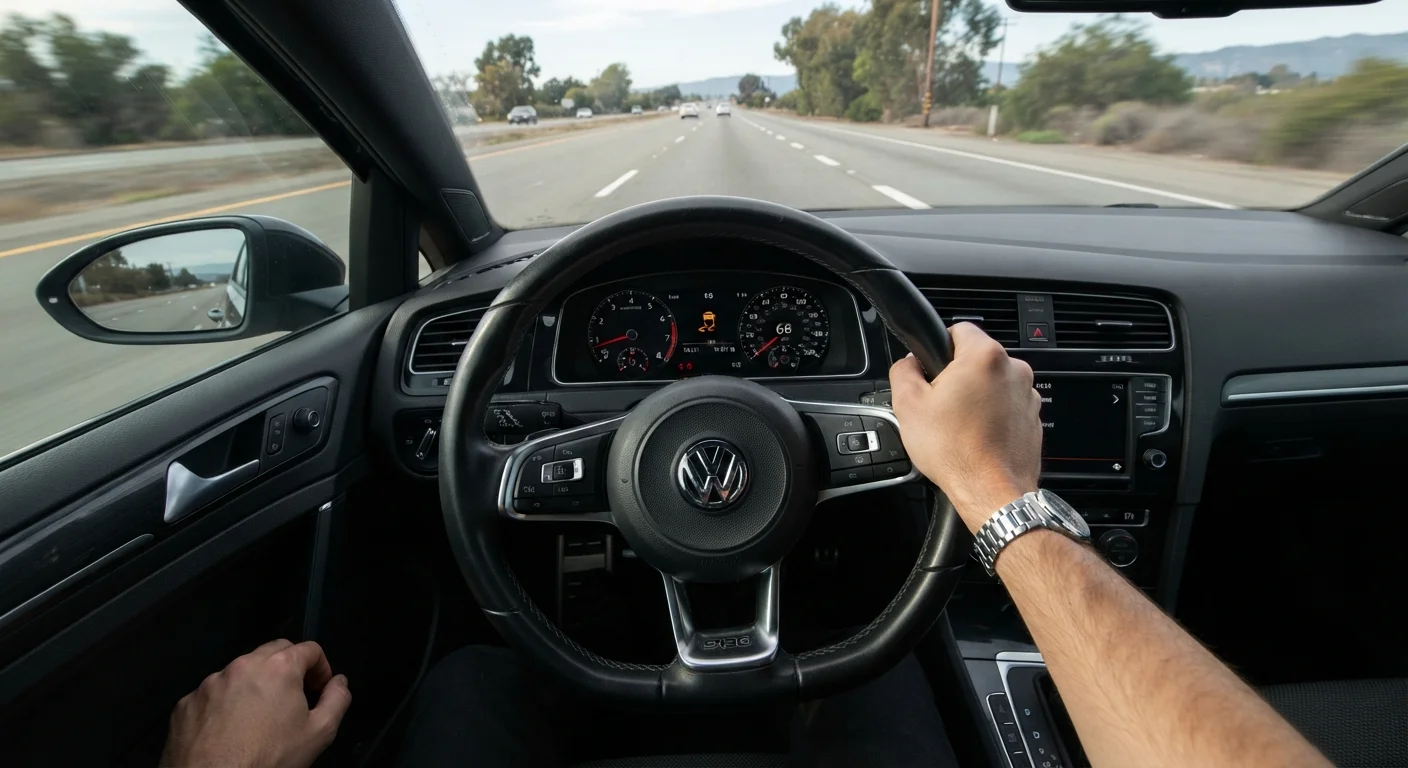
Steering pull - sometimes called drift - is when a vehicle veers consistently to the left or right while traveling on a straight, flat road without any steering input from the driver. It signals that the forces acting on both sides of the vehicle are unbalanced. Unlike a vibration or shimmy, a pull is a sustained, directional tendency rather than a momentary sensation.
Mechanics distinguish between a 'pull' (constant directional bias) and 'drift' (gradual wandering), though both share most of the same root causes and are often diagnosed together during an alignment or suspension inspection.
Why Steering Pull Is More Than a Tire Problem
Most drivers' first instinct when their car drifts to one side is to check the tires - and that instinct isn't wrong. But tire pressure is only one item on a much longer diagnostic list. Steering pull is really a symptom of force imbalance: something is creating more resistance, friction, or angular bias on one side of the vehicle than the other. Understanding which system is out of balance is what separates a quick fix from an expensive guessing game.
It's also worth distinguishing between a constant pull (present any time you're moving forward) and a pull that appears only during braking. Each pattern points toward a different set of causes, which is why describing the symptom precisely to a mechanic saves both time and money. For a broader look at how misreading symptoms leads to the wrong repairs, see our guide to car troubleshooting myths.
~85%
Alignment issues linked to suspension wear
Industry technician surveys suggest the majority of out-of-spec alignment readings involve at least one worn suspension component contributing to the drift.
15-25%
Tire life lost to misaligned wheels
Automotive engineering references estimate that significantly misaligned wheels can reduce usable tire tread life by 15 to 25 percent through accelerated, uneven wear patterns.
1 in 4
Vehicles found to have low tire pressure
The U.S. National Highway Traffic Safety Administration has found that roughly one in four passenger vehicles on American roads has at least one significantly under-inflated tire.
Alignment Angles: The Geometry Behind the Drift
Wheel alignment describes the precise angles at which your tires contact the road. Three angles matter most for steering pull:
- Camber - the inward or outward tilt of the wheel when viewed from the front. Unequal camber side-to-side causes a pull toward the side with more positive (outward) camber.
- Caster - the forward or backward tilt of the steering axis. Unequal caster is one of the most common causes of a persistent highway-speed pull; the vehicle drifts toward the side with less positive caster.
- Toe - whether the fronts of the tires point inward (toe-in) or outward (toe-out) relative to each other. Uneven toe causes both pull and accelerated, feathered tire wear.
Alignment angles drift out of specification gradually through normal driving - hitting potholes, curbs, and rough roads all shift the geometry. A vehicle that has never pulled before may develop one after a significant impact. Regular alignment checks (typically every 12,000-15,000 miles, or after any major suspension impact) help catch this early.
Suspension and Steering Components That Cause Pull
Even with perfect alignment angles on paper, worn suspension hardware can reintroduce pull by allowing components to flex or shift under load. Key parts to inspect include:
- Tie rod ends - connect the steering rack to the wheel hub. A worn tie rod end has excess play that allows the wheel angle to shift, producing both pull and imprecise steering.
- Control arm bushings - rubber or polyurethane sleeves that cushion the connection between the control arm and the vehicle frame. Deteriorated bushings let the control arm move in ways it shouldn't, altering effective alignment under load.
- Ball joints - the pivot points between the wheel hub and suspension. Significant wear here changes the wheel's position relative to the body and can make alignment corrections unstable.
These components wear gradually, which means pull from suspension wear often builds so slowly that drivers adapt to it without noticing. If your vehicle pulls after a fresh alignment that should have corrected the issue, worn suspension parts are the next logical suspect. Our guide on intermittent car problems explains why gradual symptoms are especially easy to overlook.
Try the Hands-Off Test Safely
On a quiet, flat, straight road with no traffic, briefly release the steering wheel for one to two seconds to observe whether the car tracks straight or drifts. This helps distinguish a true mechanical pull from the normal influence of road crown (most roads slope slightly to the right for drainage). Never perform this test near traffic, curves, or at high speed.
Brake System Causes: The Pull You Can't Ignore
A pull that intensifies specifically when you press the brake pedal is in a different category - it's usually a brake system problem, and it carries real safety implications.
The most common brake-related cause is a seized or sticking caliper. The caliper is the clamp that squeezes brake pads against the rotor to slow the wheel. When a caliper's piston or slide pin corrodes or seizes, it either fails to release fully after braking (dragging) or applies uneven pressure during braking. Both scenarios create a pronounced, often sudden pull toward the affected side.
A collapsed brake hose is a related issue: the rubber portion of the brake line degrades internally, acting like a one-way valve that traps hydraulic pressure at one caliper. The result is persistent drag and a noticeable pull even without braking. Uneven brake pad wear is often a downstream effect of these problems - for more on that connection, see why brake pads wear unevenly.
Neither of these conditions is safe to drive on for long. If your pull appears or worsens under braking, have the brake system inspected promptly.
Tires: More Than Just Pressure
Tires contribute to pull in ways beyond simple inflation. Three tire-related causes are worth knowing:
- Pressure differential - a tire significantly lower than its pair on the opposite side will pull the car toward the low side. Always check all four tires against the vehicle manufacturer's spec (found on the door jamb sticker, not the tire sidewall).
- Tire conicity - a manufacturing defect where the tire's internal steel belt is wound at a slight angle, making the tire behave like a cone and push the vehicle sideways. Swapping the suspect tire side-to-side and checking whether the pull reverses direction is the classic test.
- Mismatched tires - mixing significantly different tread depths or tire models across an axle creates unequal rolling resistance. This is also why consistent tire rotation patterns matter for even wear and balanced handling.
If your vehicle also shakes or vibrates at speed alongside the pull, the two symptoms often share a root cause. Our explainer on why cars shake at highway speed can help you narrow down whether you're dealing with one problem or two.
When to See a Mechanic - and What to Tell Them
Not every steering pull demands an emergency stop, but none of them should be ignored indefinitely. Here's a practical triage guide:
- Check tire pressure first. If the pull corrects after equalizing pressure, monitor and move on.
- If the pull persists after correct inflation, schedule an alignment inspection. Ask the shop to check suspension component condition at the same time.
- If the pull appears suddenly - especially under braking or after an impact - treat it as urgent and have it inspected before driving further.
When you visit a shop, describe the symptom specifically: which direction it pulls, whether it's constant or only during braking, whether it appeared suddenly or gradually, and whether it's accompanied by noise or vibration. The more precise your description, the faster and more accurately a mechanic can isolate the cause - which ultimately means a smaller repair bill for you.
This article is for general informational purposes. Automotive diagnosis involves variables specific to your vehicle's condition. For safety-related concerns, consult a qualified mechanic.