

Key Takeaways
Reading the Clues Before You Diagnose
A car that won't start isn't just one problem - it's a symptom with a family tree. The good news is that most no-start situations follow recognizable patterns, and the clues are built right into how your car responds when you turn the key (or press the start button). Before you reach for a phone to call a shop, take sixty seconds to observe carefully. Systematic observation is the foundation of accurate diagnosis.
Ask yourself three questions: What do you hear when you attempt to start? What do you see on the dashboard? And what happened just before the problem started - was the car sitting overnight in freezing temps, running fine and then suddenly quitting, or showing warning lights for days?
Your answers will point you toward one of four main categories: the electrical system (battery, alternator, starter), the fuel system (pump, filter, pressure), the ignition system (spark plugs, ignition coils), or a mechanical issue (timing belt failure, seized engine). Each category has its own set of sounds and signals.
Keep a Simple Car Log
Recording unusual sounds, sluggish starts, or warning lights as they occur - even just in a notes app - gives you and any mechanic a timeline to work from. Patterns that seem random often reveal themselves over weeks of notes. This habit costs nothing and can prevent misdiagnosis.
The Four Most Common No-Start Causes
1. Dead or Weak Battery
If you hear a rapid clicking sound when you turn the key - or nothing at all while the dashboard lights flicker - a depleted battery is the most likely culprit. Cold weather accelerates battery discharge and reduces a battery's ability to deliver the burst of power needed to crank the engine. Batteries typically last three to five years; if yours is approaching that range, voltage testing at an auto parts store (usually free) is a smart first step.
Don't immediately assume a dead battery means a dead battery, though. The alternator - which recharges the battery while the engine runs - could be underperforming. Replacing a battery without testing the charging system first is a common and costly mistake. See our guide on distinguishing battery from alternator problems before swapping parts.
2. Failed Starter Motor
A single loud click - rather than rapid clicking - when you turn the key often points to the starter motor or its solenoid (the relay that energizes the starter). The starter is an electric motor that physically spins the engine to initiate combustion. If the battery tests healthy but the engine still won't crank, the starter is a strong candidate. This repair typically requires professional assistance.
3. Fuel System Failure
If the engine cranks normally but won't fire, the fuel system deserves attention. A faulty fuel pump, clogged fuel filter, or failed fuel pressure regulator can prevent the right amount of fuel from reaching the engine. Listen for a faint whirring sound from the rear of the car for about two seconds after you turn the key to the "on" position - that's the fuel pump priming. Silence where that sound should be suggests a pump issue.
4. Ignition System Problems
Worn spark plugs, a cracked distributor cap (on older vehicles), or failed ignition coils can prevent the air-fuel mixture from igniting. This category often produces a cranking engine that simply won't "catch." Spark plugs are inexpensive and part of routine maintenance - neglecting them can cascade into harder starts and misfires over time. Common troubleshooting myths often cause drivers to overlook ignition components entirely.
Don't Keep Cranking a Flooded Engine
If you smell raw gasoline and the engine won't start, you may have flooded the cylinders with too much fuel. Continuing to crank will drain the battery and can push fuel into the oil. Wait five to ten minutes with the accelerator pressed to the floor (on older, carbureted engines) or simply wait without pressing anything (on fuel-injected engines) before trying again.
Step-by-Step: Tracing the Cause Yourself
Follow these steps in order. Each step narrows the field of suspects and helps you arrive at an informed decision about whether to handle the fix yourself or take the vehicle to a mechanic.
Check the dashboard warning lights
Turn the key to the "on" position without cranking the engine. All warning lights should illuminate briefly, then most should go off. If the battery light or check engine light stays on, or if nothing illuminates at all, you have a strong signal of an electrical problem - likely the battery or its connections.
Listen carefully when you attempt to start
- Rapid clicking, fast and repetitive: Low battery voltage - the starter is trying but can't sustain power.
- Single loud clunk: Starter solenoid or starter motor failure.
- Engine cranks but won't fire: Fuel or ignition system issue.
- Complete silence, lights dim or off: Dead battery or severely loose terminal connection.
Inspect the battery terminals
Pop the hood and visually inspect the battery terminals. White or bluish powder buildup (corrosion) on the terminals can interrupt current flow enough to prevent starting, even if the battery holds a charge. Clean terminals with a mixture of baking soda and water using an old toothbrush, then dry thoroughly. Make sure both cables are firmly clamped.
Attempt a jump-start
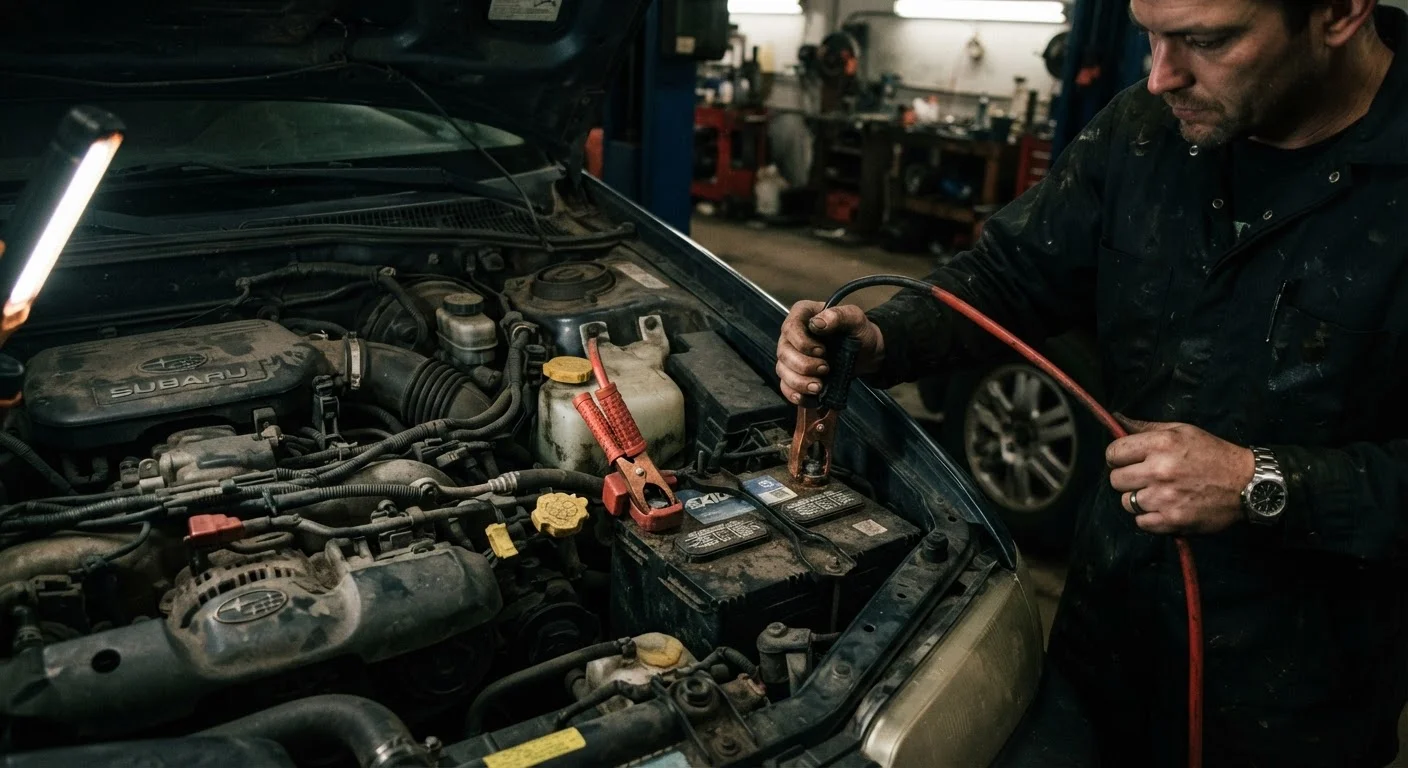
If the battery appears discharged, use jumper cables and a second vehicle (or a portable jump starter) to supply temporary power. Connect positive to positive, then negative to the assisting vehicle's negative terminal, and finally negative to an unpainted metal surface on your engine block - not the dead battery's negative terminal. Let the assisting vehicle run for two to three minutes, then attempt to start your car.
Check for fuel delivery
If the battery is confirmed healthy but the engine cranks without starting, test for fuel. Turn the key to "on" (not start) and listen near the rear of the vehicle for the fuel pump priming hum. No sound may indicate a failed pump. Also verify you haven't simply run low on fuel - fuel gauges can occasionally read incorrectly, especially in older vehicles.
Know when to call a professional
If you've worked through these steps and still can't identify the cause, or if the issue involves the starter motor, fuel pump, ignition coils, or timing components, it's time to involve a qualified mechanic. Attempting repairs beyond your skill level risks worsening the problem or creating a safety hazard. A clear description of your observations - sounds, dashboard lights, recent history - will help the mechanic diagnose faster and may reduce labor costs.
If the problem appears intermittently - starting fine sometimes and failing other times - resist the urge to dismiss it. Intermittent failures are often more serious than they appear and are harder to diagnose once they become routine. Documenting when and under what conditions the problem occurs will give a mechanic invaluable information.
No-start problems are almost always distinct from overheating failures, but both can leave you stranded. If you've ever had your temperature gauge spike before a stall, review the warning signs of engine overheating separately - the two problems require entirely different diagnostic approaches.