

Key Takeaways
Our Verdict
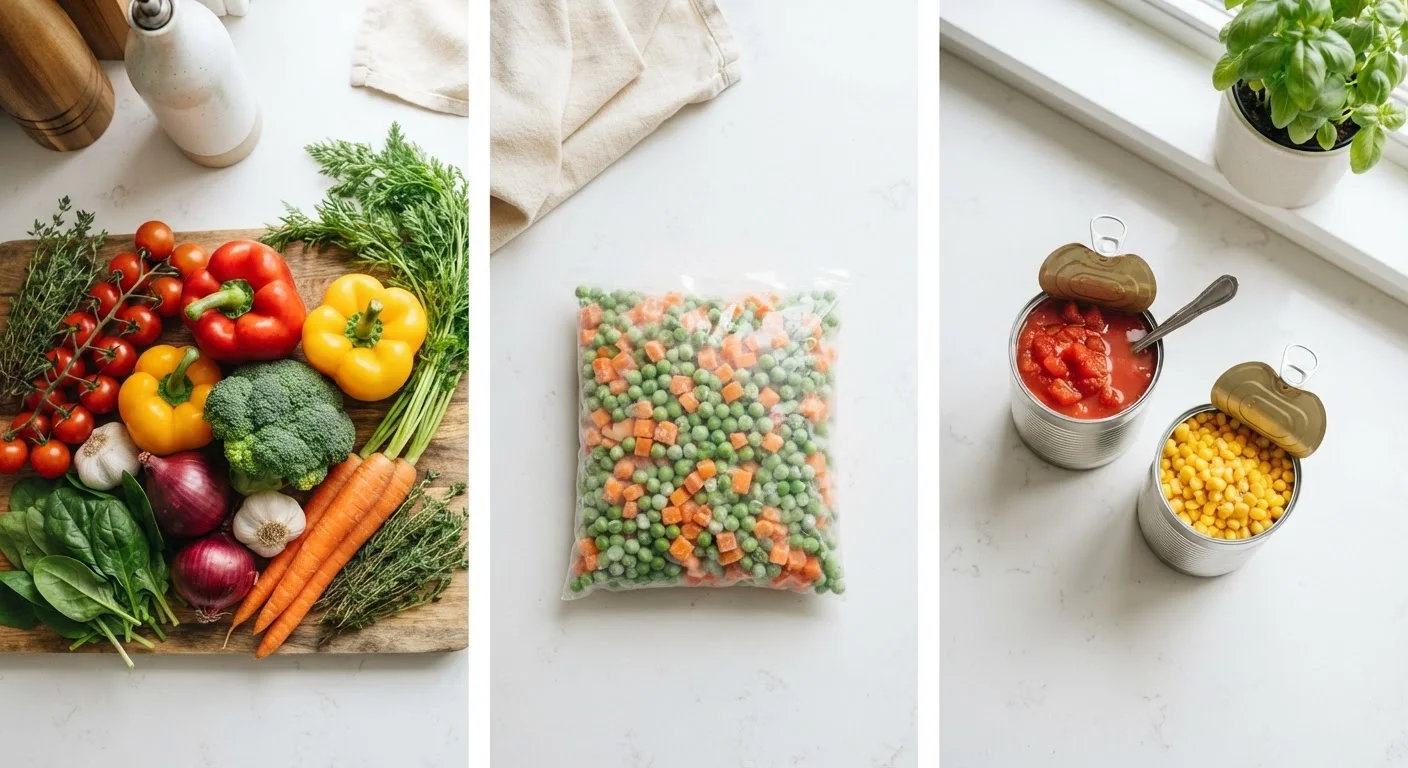
No single form of produce is universally superior. Frozen tends to edge out fresh for nutrient retention when eaten over days, while canned offers unmatched shelf life and affordability if you select low-sodium, no-added-sugar varieties. Fresh wins for texture, flavor, and short-term use. A mix of all three is the most practical and nutritious approach for most households.
| Best for | Recommended |
|---|---|
| Budget-focused shoppers prioritizing shelf stability | Canned |
| Those wanting nutrient-dense produce with longer freezer life | Frozen |
| Recipes where texture and flavor are priorities | Fresh |
| Households balancing cost, nutrition, and minimal food waste | A mix of all three forms |
The Nutrient Retention Reality
A common assumption is that fresh produce is always the most nutritious option. Research tells a more complicated story. Nutrient content in fruits and vegetables begins declining at the moment of harvest - and by the time fresh produce travels from farm to distribution center to store shelf to your refrigerator, several days to weeks may have passed.
Frozen produce, by contrast, is typically blanched and flash-frozen within hours of harvest. This process locks in water-soluble vitamins like vitamin C and certain B vitamins at close-to-peak levels. A review of studies published in peer-reviewed nutrition journals has found that frozen fruits and vegetables frequently match or exceed the nutrient content of their refrigerated fresh counterparts, particularly when fresh items have been stored for several days.
Canned produce undergoes heat processing that can degrade heat-sensitive vitamins - especially vitamin C and folate. However, minerals such as iron, calcium, and potassium, as well as dietary fiber, are largely preserved through canning. Some nutrients, like lycopene in tomatoes, may actually become more bioavailable after heat processing. The trade-off is that many canned products contain added sodium or sugar, which warrants attention. Reading nutrition labels carefully is the most direct way to identify and avoid those additives.
How Each Form Compares Across Key Criteria
Understanding the practical differences between fresh, frozen, and canned produce helps you shop and cook more strategically - especially on a tight budget.
| Fresh | Frozen | Canned | |
|---|---|---|---|
| Vitamin C retention | High if consumed quickly | High - locked in at harvest | Moderate - heat-sensitive loss |
| Mineral & fiber retention | High | High | Generally well-preserved |
| Typical cost per serving | Varies; higher out of season | Low to moderate | Generally lowest |
| Shelf life | Days to 1-2 weeks | Months to over a year | 1-5 years or more |
| Food waste risk | Higher - spoils faster | Low | Very low |
| Added sodium/sugar risk | None | Usually none | Common - label check needed |
| Texture and flavor | Best for raw or quick cook | Good cooked; softer texture | Softer; flavor varies by product |
Cost is often the deciding factor for households stretching a grocery budget. Canned goods typically carry the lowest per-serving price, followed closely by frozen. Fresh produce can be economical when purchased in season and locally, but out-of-season fresh items often cost significantly more with reduced nutritional payoff. For a deeper look at affordable, nutrient-dense staples, see foods that deliver strong nutrition under a dollar per serving.
Practical Tips for Getting the Most From Each Form
Understanding the nutritional landscape is only useful if it translates into actionable choices at the store and in the kitchen.
- Fresh: Buy in-season and shop at farmers markets or local stores when possible to minimize the time between harvest and your plate. Use delicate greens and berries within two to three days of purchase.
- Frozen: Keep a rotation of frozen vegetables and fruits in your freezer for reliable, low-waste nutrition. Avoid packages with ice crystals or clumping, which may indicate thawing and refreezing.
- Canned: Choose products labeled "no salt added" or "low sodium" for vegetables, and fruits packed in juice rather than syrup. Rinsing canned beans and vegetables under water can reduce sodium content meaningfully.
Rinse Canned Vegetables to Cut Sodium
Draining and rinsing canned vegetables under cold running water for 30 seconds can reduce their sodium content by a meaningful amount - some estimates suggest up to 40% reduction, though results vary by product. This simple step makes canned produce an even more nutritious and budget-friendly option. Look for "no salt added" varieties when available for the greatest control over sodium intake.
Combining all three forms is a well-established strategy for reducing food waste and keeping produce costs manageable. A pantry approach - stocking canned and frozen staples alongside rotating fresh items - is explored in depth in our guide on pantry-first grocery shopping.
It's also worth noting that how you cook produce affects nutrient retention across all three forms. Steaming tends to preserve more water-soluble vitamins than boiling, and shorter cooking times generally mean less nutrient loss regardless of starting form.
This article is for general informational and educational purposes only and is not a substitute for professional medical or dietary advice. Consult a registered dietitian or qualified healthcare provider for guidance specific to your health needs.