

Key Takeaways
Our Verdict
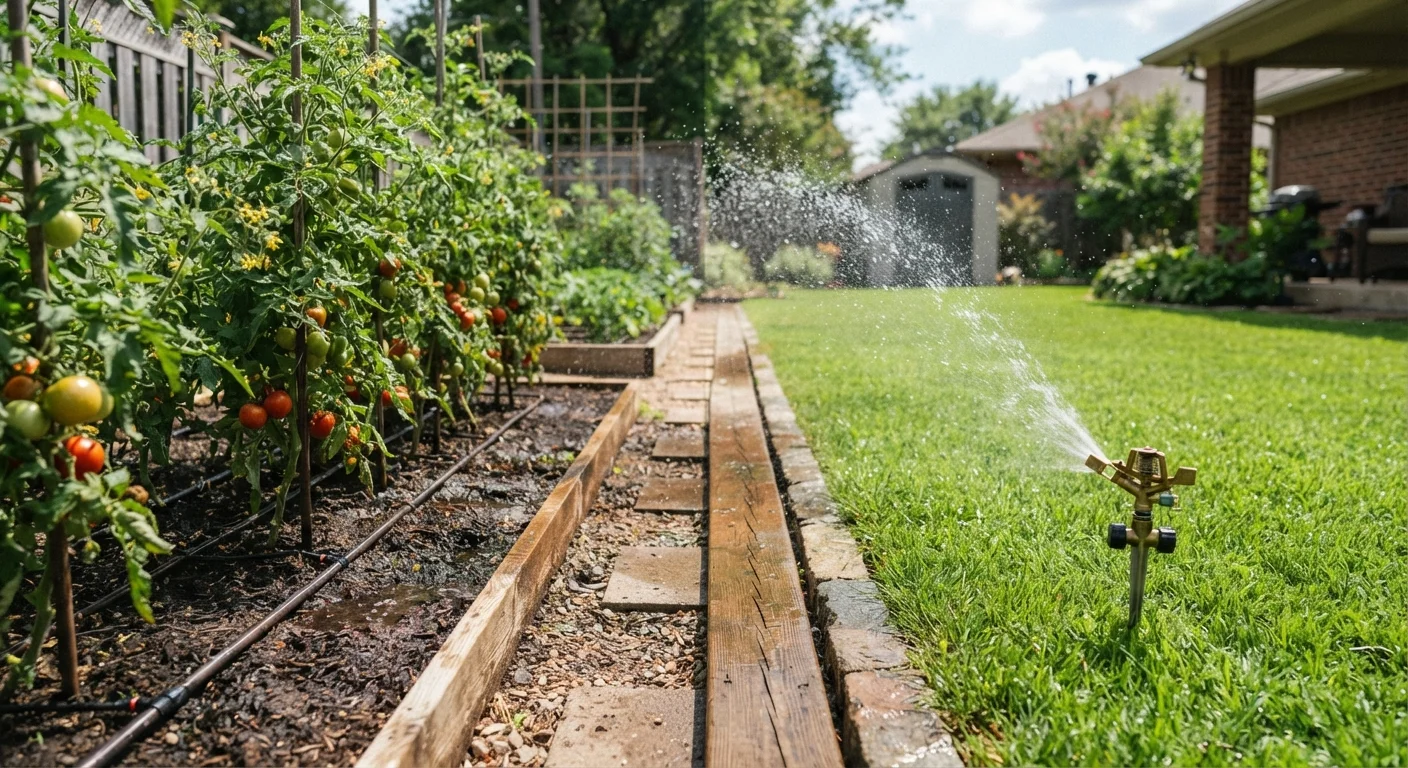
Drip irrigation is generally the more water-efficient choice for vegetable gardens, raised beds, and foundation plantings, often paying for itself through lower water bills over a few seasons. Sprinkler systems remain practical for lawns and large open areas where uniform coverage across wide ground is the primary goal. Most homeowners with mixed landscapes benefit from using both - drip for planted beds and a sprinkler or soaker approach for turf.
| Best for | Recommended |
|---|---|
| Vegetable gardens, raised beds, and shrub borders | Drip Irrigation |
| Open lawns and large grass areas | Sprinkler Systems |
| Budget-focused homeowners prioritizing long-term water savings | Drip Irrigation |
| Homeowners needing fast, simple coverage for a mixed yard | Sprinkler Systems |
How Each System Works
Understanding the mechanics behind each system helps you match the right one to your garden's actual needs rather than defaulting to what's already familiar.
Drip irrigation delivers water slowly and directly to the base of individual plants through a network of flexible tubing and small emitters. Water seeps into the soil right at the root zone, which limits the amount lost to evaporation or wind. Most home drip setups connect to a standard outdoor spigot and run on low pressure - typically 15 to 30 PSI. If you've dealt with a leaky outdoor faucet, fixing it before installing a drip system is worth doing first, since even minor pressure drops affect emitter performance.
Sprinkler systems broadcast water through the air over a wide radius. Pop-up heads, rotary heads, and oscillating units all work on the same principle: pressurized water is sprayed across the surface of a given zone. This is efficient for coverage area but less efficient for water use, since some water lands between plants, on foliage, or evaporates before reaching roots.
Water Efficiency Compared
Water efficiency is where drip irrigation holds its clearest advantage. Because water goes directly to the root zone with minimal surface exposure, drip systems can use noticeably less water than sprinklers to achieve the same soil moisture depth - estimates from university extension programs commonly cite 30-50% water savings compared to overhead irrigation, though actual results vary by soil type, plant density, and climate.
Sprinklers apply water broadly and quickly, but wind, heat, and uneven terrain all reduce how much actually reaches plant roots. Watering in the early morning reduces evaporation losses for both systems, but drip setups are less sensitive to timing since little water is ever exposed to open air.
30-50%
Potential water savings with drip vs. overhead irrigation
University cooperative extension programs commonly report this range, though savings depend on soil type, climate, and plant layout.
~50%
Outdoor water use for the average US household
According to the US Environmental Protection Agency, roughly half of residential water use goes toward landscape irrigation.
If you're planting in a water-conscious way - for example, incorporating native plants or low-water lawn alternatives - drip irrigation pairs especially well since those plants are often spaced irregularly and don't need wide broadcast coverage.
Installation and Maintenance
A basic drip system is a legitimate DIY project for most homeowners. Kits are available that include mainline tubing, emitters, connectors, and a backflow preventer. The main challenge is planning the layout so emitters land near each plant's root zone, and then adjusting as plants grow or move seasonally. Drip lines can be laid on the soil surface or buried just below a layer of mulch to protect the tubing and reduce UV degradation.
Sprinkler systems range from simple oscillating hose-end units to in-ground zone systems with automatic controllers. Permanent in-ground systems typically require trenching and may need a permit depending on your municipality - always check local codes before digging. Above-ground hose-end sprinklers require no installation beyond connecting to a spigot, making them the simpler starting point.
Add a Timer to Either System
Pairing any irrigation setup with an inexpensive hose-end timer is one of the most cost-effective upgrades you can make. Timers prevent the common mistake of overwatering during cooler stretches or after rainfall. Battery-operated models require no wiring and can be found at most hardware stores. Set watering cycles for early morning to minimize evaporation regardless of which system you use.
Maintenance for drip systems involves flushing end caps periodically, checking emitters for clogs (hard water buildup is common), and inspecting tubing for animal damage or UV cracking. Sprinkler heads need seasonal inspection for misalignment, clogging, and winter drainage in freeze-prone climates.
For guidance on timing your garden work around the season, a seasonal garden calendar can help you plan when to install, adjust, or winterize either system without wasting effort.
Cost Over Time
Upfront costs depend heavily on garden size and system complexity. A small drip kit for a raised bed or garden border can run under $30, while a comprehensive in-ground sprinkler system for a large yard can reach several hundred dollars installed - or significantly more with professional labor.
| Drip Irrigation | Sprinkler Systems | |
|---|---|---|
| Water Efficiency | High - targets root zone directly | Moderate - loses water to evaporation |
| Best Garden Type | Beds, rows, shrubs, containers | Open lawns, large grass areas |
| DIY Installation Difficulty | Low to moderate (surface kits) | Low (hose-end) to high (in-ground) |
| Typical Upfront Cost | Low to moderate for most beds | Low (hose-end) to high (in-ground) |
| Long-Term Water Cost | Generally lower | Generally higher |
| Maintenance Demands | Emitter checks, flushing, UV care | Head alignment, winterization |
| Automation Compatibility | Easy with timer and backflow valve | Easy with controller or timer |
Over time, lower water consumption with drip systems can meaningfully reduce utility bills, particularly in regions where water rates are tiered by usage. Homeowners with both a lawn and planted beds often find a hybrid approach makes sense: a sprinkler or soaker hose for the turf and drip irrigation for the beds. This connects well to the broader question of garden layout - see raised beds vs. in-ground planting for how your garden structure affects long-term costs and maintenance.
Whatever setup you choose, keep receipts and track your water bill for a full season. The data will tell you whether your system is performing as expected and where adjustments might help.