

Key Takeaways
Significantly lower water needs after establishment
Native plants adapted to local rainfall patterns often require little or no supplemental irrigation once their root systems are established, which can meaningfully reduce outdoor water use.
Reduced mowing and fertilizing labor
Many lawn alternatives - including sedge, clover, and creeping thyme - grow slowly or stay low enough that mowing frequency drops substantially or becomes unnecessary entirely.
Natural weed suppression from dense plantings
Ground-covering alternatives and dense native plantings shade out the bare soil that weeds need to germinate, reducing ongoing weed management without herbicides.
Supports local pollinators and biodiversity
Native flowering plants provide food and habitat for bees, butterflies, and other beneficial insects that are regionally adapted to depend on them.
Potential eligibility for local rebates or programs
Many water utilities and municipalities offer financial incentives - sometimes called 'lawn-to-garden' or 'turf replacement' programs - to homeowners who reduce irrigated turf area.
Demanding and costly establishment phase
The first one to two growing seasons typically require consistent watering, weed control, and patience before native plants and alternatives become self-sustaining. This is the most common point of failure.
Upfront removal of existing turf is labor-intensive
Effectively killing or removing established turf grass - whether by solarization, smothering, or mechanical removal - takes time and effort before new planting can even begin.
HOA rules or local ordinances may restrict options
Some neighborhoods and municipalities have appearance standards that limit how naturalistic a front yard can look, so it's essential to verify local rules before investing in major changes.
Not all alternatives handle foot traffic well
Clover, creeping thyme, and many native plantings are less durable under repeated heavy foot traffic than turf grass, which can be a real limitation for families with active outdoor use.
Regional plant selection requires research
A plant labeled 'native' at a nursery may be native to a broad region but not well-suited to your specific soil type, sun exposure, or microclimate - getting this wrong wastes money and effort.
Aesthetics may not suit every homeowner
Naturalistic plantings look intentional and attractive to some; to others they read as untidy. Personal preference and neighborhood context both matter when planning a transition.
Our Verdict
Transitioning to native plants or lawn alternatives offers genuine long-term savings on water and maintenance for most homeowners, but it requires an honest assessment of upfront costs, establishment effort, and local conditions. The approach works best when introduced gradually rather than as a wholesale overnight overhaul.
Homeowners with moderate sun exposure, rising water bills, or limited time for weekend yard work who are willing to invest in a one-to-two season establishment period.
Why Homeowners Are Rethinking the Traditional Lawn
The classic American lawn - uniformly green, closely mowed, and thirsty - carries real costs. Outdoor water use accounts for a substantial portion of household consumption in many US regions, and a significant share of that goes to irrigating turf grass. Mowing, fertilizing, and treating for weeds also adds up in both time and money across a typical growing season.
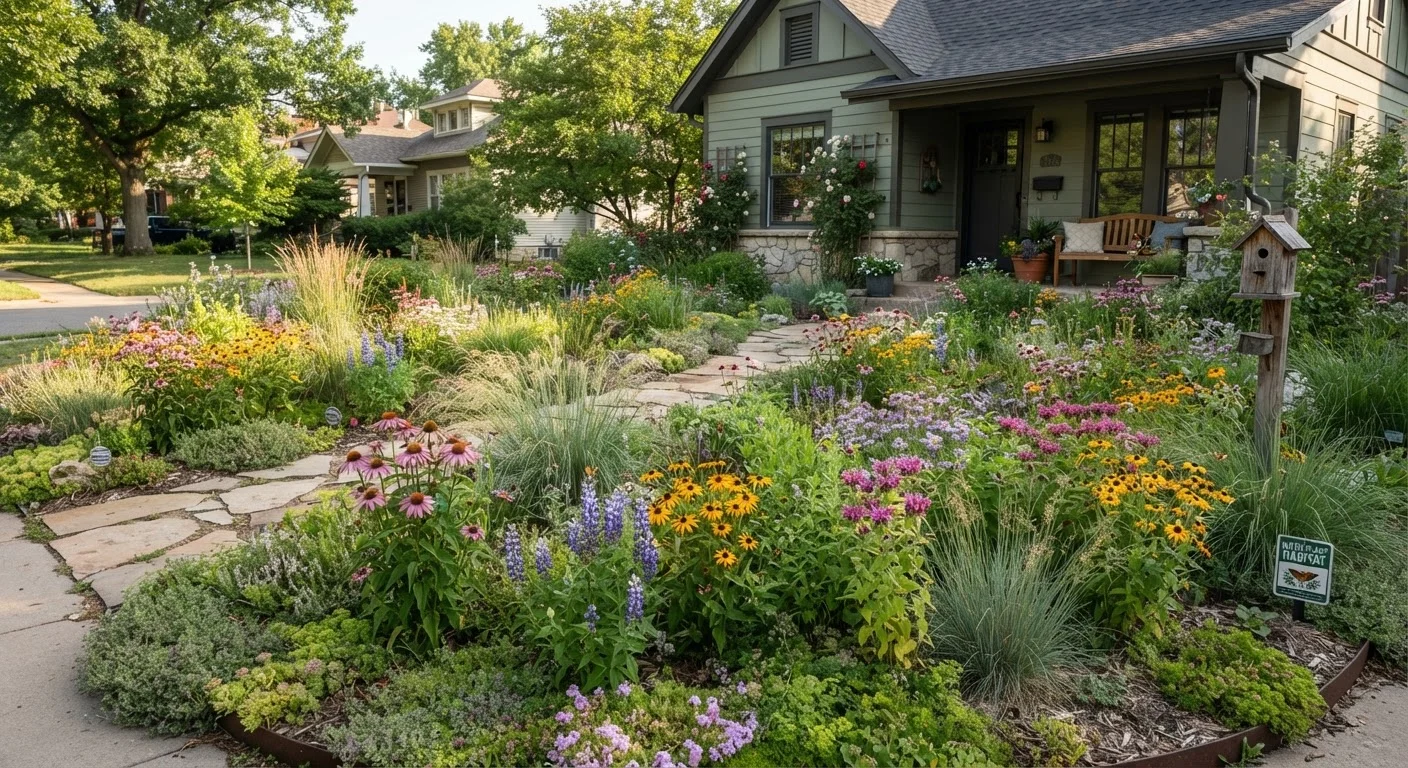
Native plants (species that evolved in your specific region) and lawn alternatives like clover, creeping thyme, or sedge grasses are increasingly seen as practical responses to these pressures. They're not a fringe trend - many municipalities now offer rebates or run public campaigns encouraging homeowners to reduce turf in favor of drought-tolerant and ecologically supportive planting. Before committing, though, it's worth understanding what you're actually trading away and what you're gaining.
If reducing outdoor water use is part of a broader effort to lower monthly costs, it connects directly to the kinds of practical adjustments covered in our guide to lowering household utility overhead.
The Real Advantages of Going Native (or Going Alternative)
Significantly lower water needs after establishment
Native plants adapted to local rainfall patterns often require little or no supplemental irrigation once their root systems are established, which can meaningfully reduce outdoor water use.
Reduced mowing and fertilizing labor
Many lawn alternatives - including sedge, clover, and creeping thyme - grow slowly or stay low enough that mowing frequency drops substantially or becomes unnecessary entirely.
Natural weed suppression from dense plantings
Ground-covering alternatives and dense native plantings shade out the bare soil that weeds need to germinate, reducing ongoing weed management without herbicides.
Supports local pollinators and biodiversity
Native flowering plants provide food and habitat for bees, butterflies, and other beneficial insects that are regionally adapted to depend on them.
Potential eligibility for local rebates or programs
Many water utilities and municipalities offer financial incentives - sometimes called 'lawn-to-garden' or 'turf replacement' programs - to homeowners who reduce irrigated turf area.
Once native plants and many lawn alternatives move past their first growing season, they typically need far less from you. Root systems that reach deeper into the soil access moisture that shallow turf roots can't, which is why many native plantings can go weeks without supplemental water during normal conditions. Reading your plants' actual water signals becomes easier when you're working with species matched to your climate.
Ground covers like clover and creeping thyme compete effectively with weeds once dense enough to shade the soil, reducing the need for chemical intervention. For a deeper look at non-chemical weed suppression, see our article on weed control methods that actually hold up. Native flowering plants also support local pollinators - a benefit that's harder to quantify but widely documented in ecological research.
Honest Drawbacks to Plan Around
Demanding and costly establishment phase
The first one to two growing seasons typically require consistent watering, weed control, and patience before native plants and alternatives become self-sustaining. This is the most common point of failure.
Upfront removal of existing turf is labor-intensive
Effectively killing or removing established turf grass - whether by solarization, smothering, or mechanical removal - takes time and effort before new planting can even begin.
HOA rules or local ordinances may restrict options
Some neighborhoods and municipalities have appearance standards that limit how naturalistic a front yard can look, so it's essential to verify local rules before investing in major changes.
Not all alternatives handle foot traffic well
Clover, creeping thyme, and many native plantings are less durable under repeated heavy foot traffic than turf grass, which can be a real limitation for families with active outdoor use.
Regional plant selection requires research
A plant labeled 'native' at a nursery may be native to a broad region but not well-suited to your specific soil type, sun exposure, or microclimate - getting this wrong wastes money and effort.
Aesthetics may not suit every homeowner
Naturalistic plantings look intentional and attractive to some; to others they read as untidy. Personal preference and neighborhood context both matter when planning a transition.
The establishment phase is the most frequently underestimated challenge. During the first season - sometimes two - native plants and alternatives need consistent watering and weeding while they're getting rooted. This is often the period when homeowners give up, mistaking slow establishment for failure.
Aesthetics are also genuinely subjective. A meadow-style planting looks intentional to some eyes and neglected to others, and HOA rules or local ordinances in some areas still restrict how naturalized a yard can look from the street. Always verify local regulations before making significant changes to your front yard. Similarly, some alternatives don't tolerate heavy foot traffic the way turf does, which matters if you have children or pets who use the yard actively.
Check Local Rules Before You Dig
Before removing turf or establishing a naturalistic planting, check your local municipal code and any applicable HOA guidelines. Some jurisdictions have specific rules about plant height, front-yard appearance, and what materials may be used as ground cover. When permits or variances are required, the application process typically takes several weeks - plan accordingly so you're not planting into an unresolved approval situation.
If you're comparing this approach against simply replanting or reseeding your existing lawn, our grass seed vs. sod comparison lays out costs and effort clearly so you have a full picture of your options.
Practical Steps for a Phased Transition
A full lawn replacement in one season is rarely the right approach for budget-conscious homeowners. Instead, consider starting with one defined area - a strip along a fence, a dry corner that grass has always struggled in, or a slope that's awkward to mow. These are spots where alternatives are likely to outperform turf quickly, giving you visible proof of concept before expanding.
Soil preparation matters more with native plants than many gardeners expect. Removing existing turf thoroughly (smothering with cardboard or repeated tilling) prevents turf grass from competing with new plantings during establishment. Pairing natives with appropriate ground covers can help suppress weeds in the meantime - something covered in detail in our guide to low-maintenance ground covers.
Water delivery during establishment also deserves thought. Drip irrigation is generally more efficient than overhead sprinklers for the types of plantings used in lawn alternatives. Our drip vs. sprinkler comparison can help you decide what makes sense for your setup and budget.
30-60%
Share of household water used outdoors
According to the US Environmental Protection Agency (EPA), outdoor water use - primarily lawn and garden irrigation - can represent 30 to 60 percent of a household's total water consumption in drier regions.
50-75%
Potential irrigation reduction with native plantings
Landscape water use studies from cooperative extension programs in drought-prone states suggest that established native gardens can use 50 to 75 percent less irrigation water than comparable turf areas.