

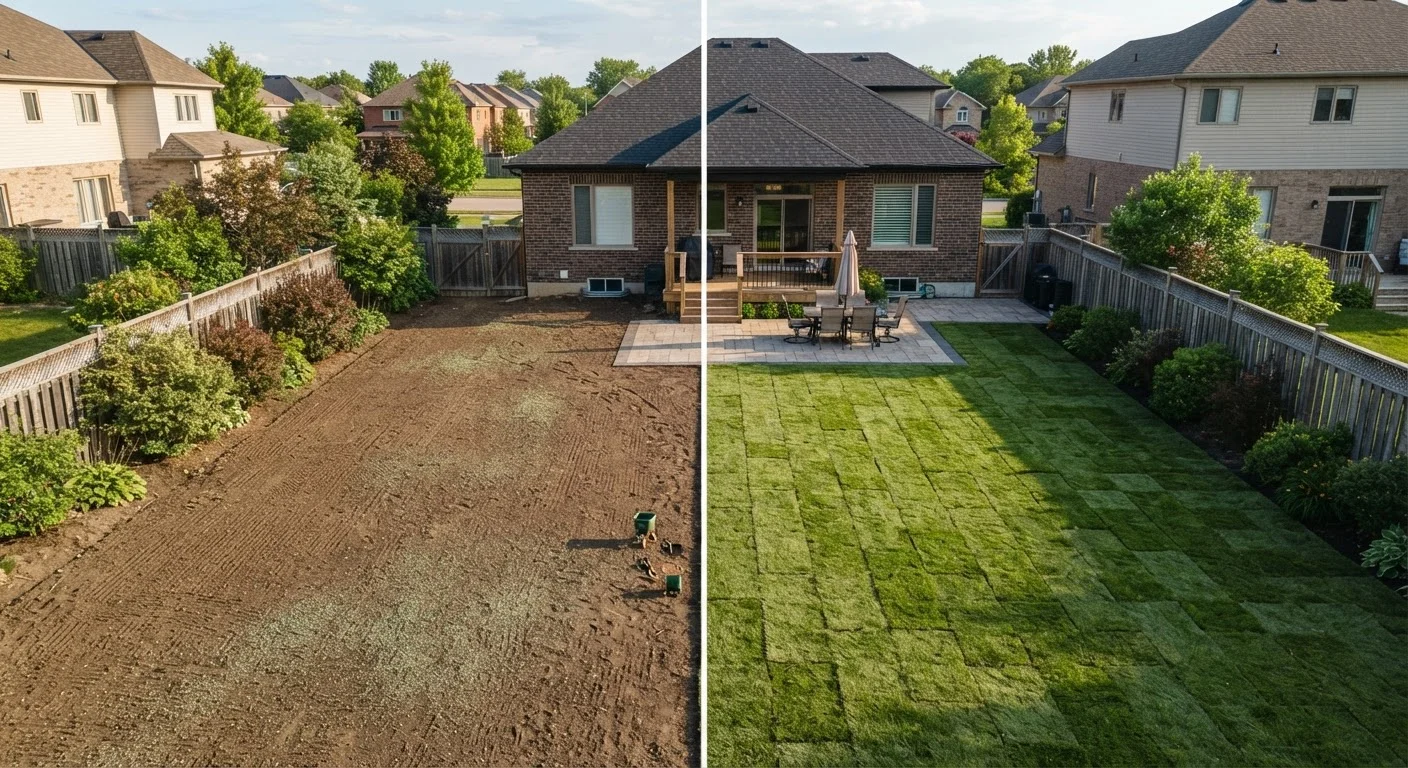
Key Takeaways
Option A
Grass Seed
The patient, budget-friendly path to a full lawn.
Best for: Homeowners with time to wait and a tight budget who want to cover large areas without significant upfront cost.
Option B
Sod
The instant lawn solution with a higher price tag.
Best for: Homeowners who need a usable, established lawn quickly - especially for erosion control or curb appeal deadlines.
If you're working with a limited budget and a large lawn area
Grass Seed
Seed costs a fraction of sod per square foot, making it far more practical when covering hundreds or thousands of square feet. Patience is the main trade-off.
If you need a lawn established quickly - for erosion, resale, or heavy foot traffic
Sod
Sod knits into the soil within two to three weeks and holds ground immediately, making it the right call when time or slope stability is a factor.
If you're overseeding thin or patchy areas in an existing lawn
Grass Seed
Seed blends into surrounding turf naturally and is the standard approach for filling in bare patches without disturbing healthy grass nearby.
If you're establishing a small front yard or high-visibility area before a deadline
Sod
For compact areas where appearance matters right away, sod's higher cost per square foot becomes more manageable and the fast result is worth the premium.
If you want maximum control over grass variety and long-term lawn health
Grass Seed
Seed gives you a far wider selection of grass varieties - including drought-tolerant and regionally adapted cultivars - that may not be available as sod in your area.
The Real Cost Gap Between Seed and Sod
Cost is usually the deciding factor - and the gap is substantial. Grass seed generally runs between $0.05 and $0.30 per square foot depending on the grass variety, while sod typically costs $0.50 to $0.90 per square foot for the material alone. Factor in professional installation and that figure can double. On a 2,000-square-foot lawn, that difference can translate to hundreds or even thousands of dollars.
That said, seed isn't entirely free of hidden costs. You'll likely need a starter fertilizer, a rake or slit-seeder rental, and straw mulch to retain moisture - plus you may need to replace seed in spots where germination fails. Sod, by contrast, has a higher upfront cost but fewer do-overs when it's installed correctly on well-prepared soil.
For budget-focused homeowners, seed wins on cost at nearly every scale. The exception is small, high-priority areas where sod's speed justifies the spend. See our year-round lawn care checklist to understand ongoing costs after your lawn is established.
| Criterion | Grass Seed | Sod |
|---|---|---|
| Material cost (per sq ft) | $0.05-$0.30 | $0.50-$0.90+ |
| Time to usable lawn | 6-10 weeks | 2-3 weeks |
| Grass variety selection | Very wide | Limited (3-5 types) |
| Erosion control (slopes) | Poor until established | Immediate |
| Soil prep required | Yes - essential | Yes - essential |
| Best planting season | Early fall or spring | Most seasons (w/ watering) |
| DIY difficulty | Low to moderate | Moderate (heavy, time-sensitive) |
| Watering intensity after install | High (daily for weeks) | High (daily for 2-3 weeks) |
Timeline and Establishment: Patience vs. Instant Results
Seed requires patience. Most cool-season grasses like tall fescue or Kentucky bluegrass take 7 to 21 days to germinate, and you shouldn't put heavy foot traffic on a seeded lawn for at least six to ten weeks. Warm-season grasses like bermuda or zoysia take even longer to fill in from seed. During that window, consistent watering - sometimes twice daily - is essential.
Sod gives you a functional surface within two to three weeks once the roots begin knitting into the soil beneath. It's not fully established - you should still limit heavy traffic for a month - but the lawn is green, erosion-resistant, and visually complete almost immediately. For homes going on the market or projects with a fixed deadline, that matters a great deal.
Timing your project correctly makes a meaningful difference for either method. Cool-season grasses establish best when seeded in early fall (soil is warm, air is cooling) or early spring. Sod is more forgiving across seasons, but summer installs require aggressive watering to prevent it from drying out before roots take hold. Aerating compacted soil before either method dramatically improves success rates.
Soil Prep: The Step That Determines Everything
Here's the thing most lawn guides underplay: both seed and sod fail for the same reason - poor soil preparation. Skipping this step is the single most common mistake homeowners make, and it wastes both money and effort regardless of which method you choose.
For seed, you need a loose, level seedbed with good contact between seed and soil. That typically means tilling or loosening the top two to four inches, removing debris, and raking smooth. For sod, the soil needs to be graded so water drains away from structures, then firmed slightly - not compacted - so the sod roots have something to grip without air pockets underneath.
In either case, a basic soil test (available through many university extension programs) tells you whether you need lime to adjust pH or amendments to improve nutrient levels before you plant. Skipping this step means even a perfect installation can underperform. For related context on building healthy ground from scratch, our budget garden-starting guide covers soil fundamentals that transfer directly to lawn prep.
When to Call a Pro for Soil Work
If your yard has significant grading issues, heavy clay, or drainage problems, a landscaper or grading contractor can correct these before you plant. Electrical, gas, and underground utility lines may be present - always call 811 (the national dig-safe line) before any tilling or deep grading work. Skipping this step isn't just a lawn risk; it's a safety issue.
Variety Selection and Long-Term Lawn Fit
Seed wins clearly when it comes to grass variety options. Whether you need a shade-tolerant fine fescue blend, a drought-hardy buffalo grass, or a traffic-resistant turf-type tall fescue, seed gives you access to a wide range of cultivars specifically bred for regional climates and conditions. Sod producers grow what sells in volume - typically two or three common varieties - which may or may not be the best fit for your soil, climate, or sun exposure.
This matters for long-term lawn health. A grass variety matched to your region and conditions will require less water, less fertilizer, and less intervention over time. If reducing inputs is a goal, variety choice at establishment is one of the highest-leverage decisions you'll make. Our guide to fertilization basics explains how grass type affects your ongoing feeding schedule.
If you're open to stepping back from traditional turf entirely, it's worth considering whether your lawn goals might be met with less grass overall. Native plants and lawn alternatives can dramatically reduce the area you need to seed or sod in the first place.