

Key Takeaways
Why the Symptoms Overlap
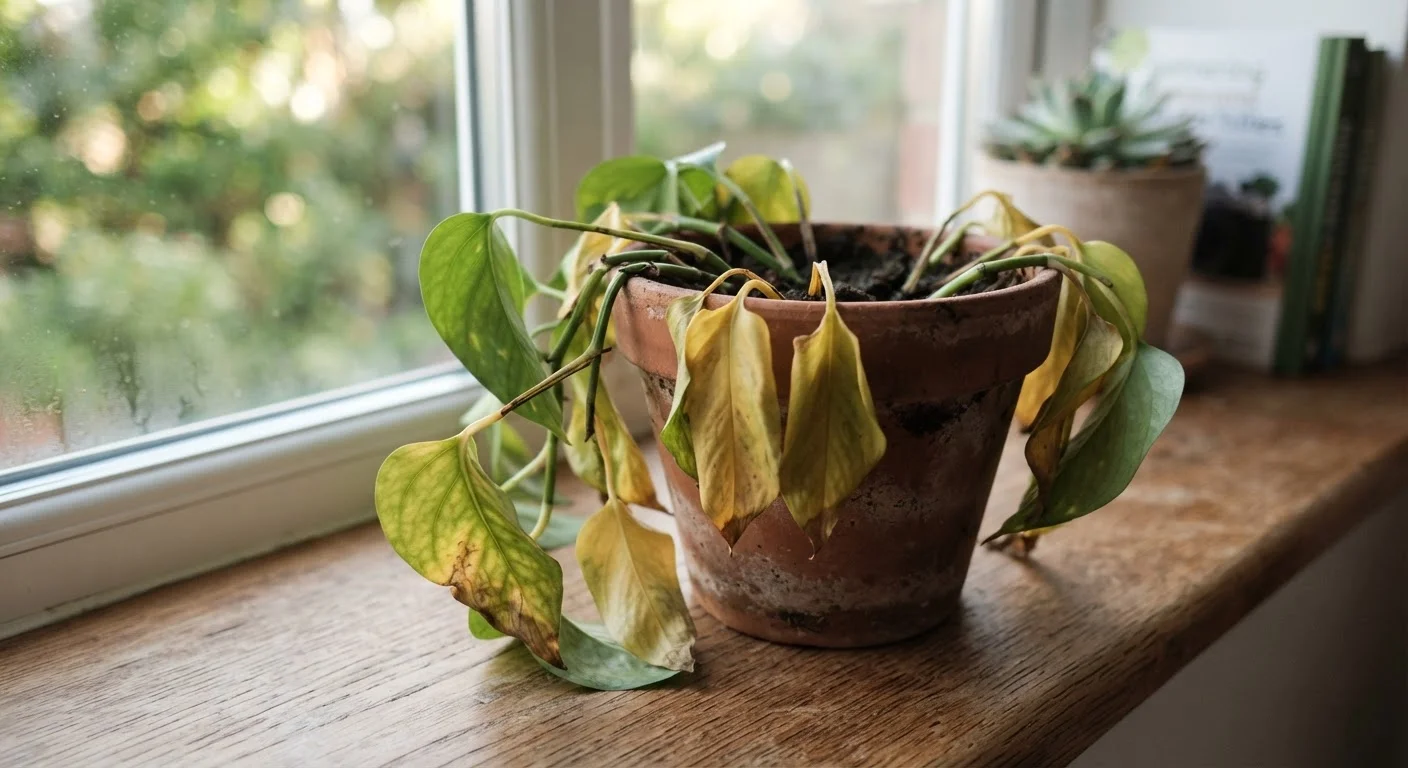
Few plant problems cause as much confusion as overwatering and underwatering - and that confusion is completely understandable. Both conditions can produce wilting, yellowing leaves, and a plant that looks generally unhappy. The reason comes down to root function: healthy roots absorb both water and oxygen from the soil. When a plant goes too dry, roots lose turgor and can't move water upward. When soil stays waterlogged for too long, roots are deprived of oxygen, begin to decay, and lose the ability to absorb water even when it's all around them. The end result looks remarkably similar from above the soil line.
This is why reacting to leaf symptoms alone - without checking the soil - often makes things worse. A wilting plant that's already drowning gets more water; a parched one gets left alone because its soil looks damp on top. Learning to read the full picture changes everything.
Myth
If my plant is wilting, it needs water immediately.
Fact
Wilting is a stress response that can result from either too much or too little water - you need to check the soil before acting.
Wilting happens when root cells can't supply enough water to keep leaf tissue firm. That can occur because soil is bone dry, or because waterlogged roots have suffocated and can no longer function. Pouring more water onto an already saturated root zone accelerates root decay. Always confirm soil moisture at root depth before watering a wilting plant.
Myth
Yellowing leaves always mean the plant needs more water.
Fact
Yellowing is among the most common symptoms of overwatering, not a reliable sign of drought stress.
When roots sit in standing water for extended periods, they begin to break down and can no longer deliver nutrients to the plant. Chlorophyll production suffers, and leaves turn yellow - often starting with older, lower leaves. Drought stress more typically causes browning at leaf tips and edges or a dull, grayish-green appearance before full wilting sets in. The location and texture of the yellowing matters.
Myth
Watering on a set schedule - say, every three days - keeps plants healthy.
Fact
Watering schedules ignore the actual variables that determine soil moisture: temperature, humidity, pot size, soil composition, and the plant's growth stage.
A plant in a terracotta pot in full summer sun may need water every day, while the same plant in a glazed ceramic pot on a shaded porch might need water once a week. Seasonal shifts also change how quickly soil dries. Schedules are a starting point at best. The only reliable signal is the state of the soil itself.
Myth
If the top inch of soil is dry, the plant definitely needs watering.
Fact
Surface soil dries out much faster than the root zone, so it's a poor indicator of whether roots actually need more moisture.
In most container plants, roots sit several inches below the surface. The top layer can feel dry within hours of watering on a warm day, even while deeper soil remains adequately moist. Relying on surface feel leads to chronic overwatering. The standard recommendation from most extension services is to check moisture at least two inches deep before watering most houseplants and annuals - deeper for larger containers and shrubs.
Myth
Overwatered plants just need to dry out, and they'll bounce back quickly.
Fact
Recovery from overwatering depends heavily on whether root rot has set in - and once roots decay, recovery takes significant time and is not always possible.
Underwatered plants often recover within hours of a thorough watering. Overwatered plants that have developed root rot face a much steeper recovery. Rotted roots must be pruned away, the plant repotted in fresh mix, and conditions carefully managed to allow regrowth. Some plants - particularly those with limited root systems or that have been sitting in wet soil for weeks - may not recover at all. Prevention is considerably easier than treatment.
How to Actually Diagnose Your Plant
The single most reliable diagnostic tool costs nothing: your finger. Push it two inches into the soil near the root zone. If it comes out dry and the soil crumbles, the plant likely needs water. If it comes out cool and coated with clinging wet soil, hold off. For larger containers or garden beds, a wooden chopstick or a long wooden skewer works like a cake tester - insert it, wait 30 seconds, and pull it out. Moisture sticks to wood. Dry soil doesn't.
Beyond the finger test, look at the texture of drooping leaves. Underwatered leaves tend to feel thin, papery, or crisp at the edges. Overwatered leaves often feel soft, slightly mushy, or slimy at the base of the stem. Check for any yellowing pattern: uniform pale yellowing across older, lower leaves often suggests overwatering and poor drainage, while browning tips or crispy edges on outer leaves usually indicate dry conditions or low humidity.
Don't Water Based on Pot Weight Alone
Lifting a pot to gauge dryness by weight is sometimes recommended, but it's an unreliable method without a clear baseline. Pot weight varies by soil mix, pot material, and what else is in the container. Without knowing what a fully dry pot of that specific plant and soil should weigh, the method introduces guesswork. Use the finger or skewer test for a direct, consistent reading of actual soil moisture.
If you suspect root rot from chronic overwatering, remove the plant from its pot and inspect the roots directly. Healthy roots are white or tan and firm. Rotted roots are brown, black, or gray and will feel soft or pull apart easily. You can trim away rotted roots with clean scissors, let them air-dry briefly, and repot in fresh, well-draining mix - though recovery is not guaranteed.
Matching your watering to actual conditions - rather than a rigid schedule - makes a meaningful difference over time. If you're redesigning your outdoor setup to reduce the guesswork, the comparison of drip irrigation and sprinkler systems walks through how each approach manages soil moisture. And if persistent bare or struggling patches in your lawn suggest a deeper soil issue, what bare patches reveal about your soil is worth a read. For homeowners looking to spend less time and water overall, native plants and lawn alternatives offers a practical path forward.