

Key Takeaways
Bare Patches in Lawn
Bare patches are areas of a lawn where grass has died, failed to establish, or been prevented from growing due to conditions in the soil or environment above it. They are symptoms, not the root problem - the soil underneath is usually telling you something specific about compaction, drainage, chemistry, or biological activity. Understanding what's driving the bare spot guides the right fix, saving you time and money on guesswork.
Bare spots can result from a range of interacting factors - including soil pH outside the 6.0-7.0 range optimal for most turf grasses, excessive thatch buildup (generally over ½ inch) blocking water and nutrient penetration, or bulk density levels that restrict root growth.
Reading the Patterns: What Different Bare Spots Reveal
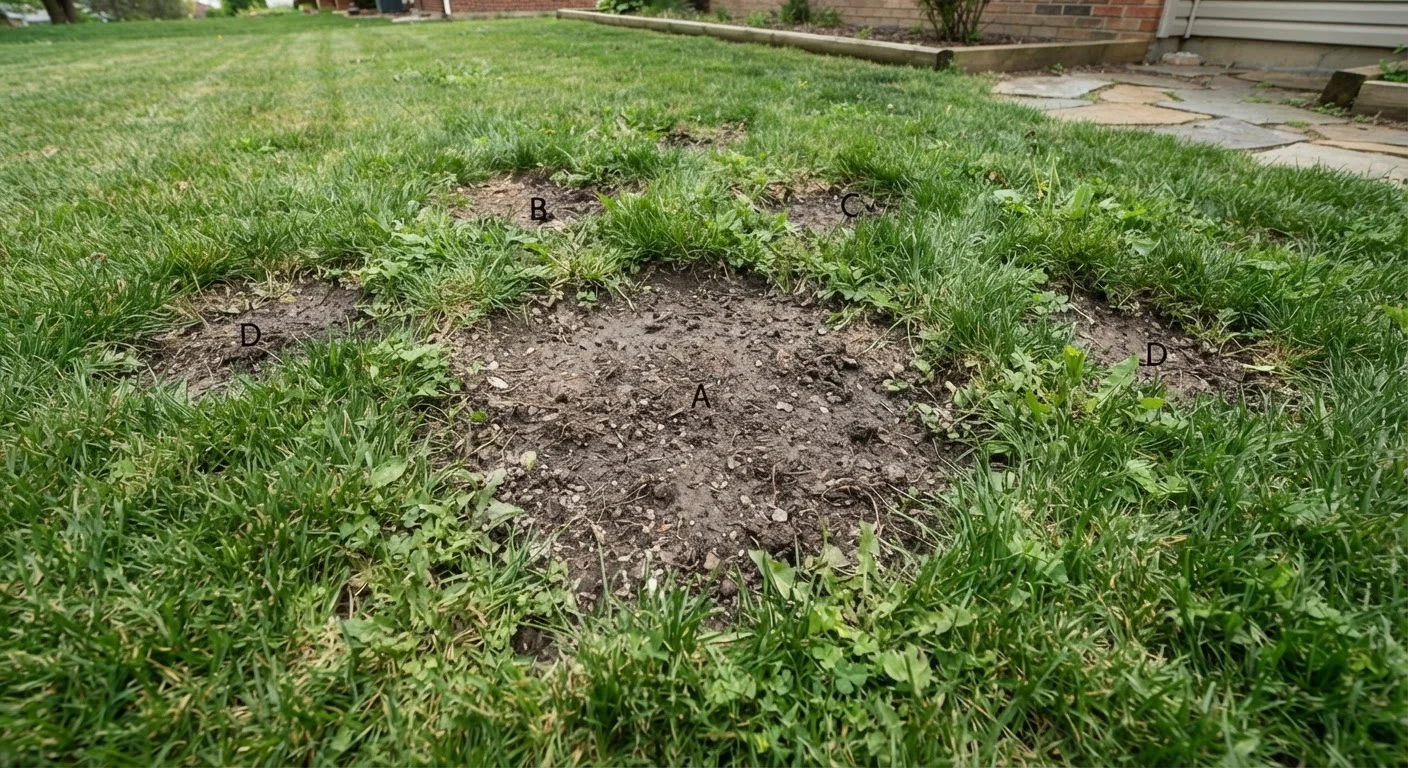
Not all bare patches are alike, and their shape, location, and size offer meaningful clues. A rough circle of dead grass in an otherwise healthy lawn often points to a fungal disease or a localized chemical spill - think pet urine or fertilizer burn. Irregular, scattered thinning across a large area, on the other hand, tends to suggest a systemic issue like soil compaction or pH imbalance that affects the entire root zone unevenly.
Patches concentrated in high-traffic areas - a path between the gate and the back door, for example - are almost always compaction-related. Heavy foot traffic presses soil particles together, squeezing out the air pockets that grass roots need to breathe and grow. Patches under tree canopies raise a different question: is this a shade problem, a root competition problem, or both?
Taking note of where and how a bare patch grows (or doesn't) before reaching for seed or fertilizer is the diagnostic step most homeowners skip - and it's the one that saves the most money.
Pattern Location Matters for Diagnosis
Before treating any bare patch, photograph it and note where it sits: under a tree, in a high-traffic path, in a low-lying area, or randomly scattered in open turf. Each location pattern points to a different cause - shade and root competition, compaction, drainage, or disease respectively. Treating the wrong cause wastes effort and money.
Compaction: When Soil Becomes a Barrier
Compacted soil is one of the most common - and most misunderstood - causes of lawn bare patches. When soil is compressed, roots can't penetrate deeply enough to access water and nutrients. Grass thins, weakens, and eventually dies in those zones, even if you're watering and fertilizing regularly.
The screwdriver test is a practical first check: press a standard screwdriver into moist soil. Penetrating 6 inches with minimal resistance is a good sign. If you hit resistance well before that, your soil likely needs aeration. Core aeration - physically removing small plugs of soil - is the most effective mechanical remedy. Learn more about why this step matters in our guide to lawn aeration.
Compaction is worsened by wet-weather foot traffic and using heavy equipment on lawn areas. Allowing soil to dry before heavy use helps reduce future compaction.
Try the Screwdriver Test Before Aerating
Before renting an aerator or hiring a service, confirm compaction is actually your problem. Push a standard screwdriver 6 inches into moist (not waterlogged) soil. Easy penetration means compaction probably isn't the issue - look instead at pH or thatch. This two-second test can save you a trip to the equipment rental shop.
Thatch and pH: The Hidden Chemistry Behind Bare Spots
Thatch - the spongy layer of decomposing organic matter sitting between grass blades and the soil surface - becomes a problem when it builds up beyond about half an inch. A thick thatch layer acts like a thatched roof: it sheds water rather than allowing it to soak into the soil beneath, creating drought stress even when you're running a sprinkler. It also harbors fungal pathogens and insect pests. Grass in heavily thatched areas often looks thin, yellowish, and spongy underfoot.
Soil pH - the measure of acidity or alkalinity on a 0-14 scale - affects how well grass roots can absorb nutrients that are already present in the soil. Most common lawn grasses perform best in a pH range of roughly 6.0 to 7.0. Outside that window, nutrients become chemically unavailable even if they exist in the soil, causing grass to starve and thin out. Highly acidic soils (below 6.0) are common in rainy regions; alkaline soils (above 7.5) appear more frequently in arid climates and areas with hard water irrigation.
The most reliable way to understand what your soil actually contains - and what it's lacking - is a soil test. Our article on soil testing for home gardeners explains how to interpret results and act on them without overspending on amendments. Knowing your pH before adding lime or sulfur prevents the common mistake of adjusting in the wrong direction.
For fertilizer choices after you've corrected your soil conditions, understanding what nutrients your lawn actually needs - explored in our guide to fertilizer numbers - helps you spend precisely where it counts.
When Bare Patches Lead to a Bigger Question
Sometimes the honest answer to persistent bare patches isn't more seed or more soil work - it's reconsidering what you're growing and where. If a section of your yard has poor drainage, heavy shade, or constant foot traffic, maintaining turf there may simply be a losing battle that consumes time and budget each season.
Alternatives like ground covers, ornamental gravel, or native plantings can thrive in exactly the conditions where turf grass struggles. Our article on lawn alternatives that thrive with less work and water walks through options that can reduce weekend labor and water bills at the same time.
If you do decide to repair a bare area with new grass, the choice between seed and sod carries real cost and timing implications. See our comparison of grass seed vs. sod before committing. And if yellowing around bare areas is making you second-guess your watering approach, overwatering and underwatering often look identical - learning to tell them apart prevents a common and costly mistake.
The central lesson of bare patches is that the soil is always communicating. Learning to interpret those signals is the skill that makes every other lawn care effort work harder.