

Key Takeaways
Why Non-Chemical Weed Control Deserves a Closer Look
Herbicide costs add up fast, and many homeowners - especially those with vegetable gardens, pets, or kids playing outside - reasonably want to avoid synthetic chemicals in their yard. The problem is that the internet is full of folk remedies presented with the same confidence as peer-reviewed research. Before you pour anything on your garden beds, it helps to know which methods have real evidence behind them and which ones will cost you time, money, and possibly a few desirable plants.
Non-chemical weed control isn't a single strategy - it's a toolkit. The methods that work tend to either block light, disrupt germination, exhaust root reserves, or use competition from desirable plants. If a remedy doesn't fit one of those categories, skepticism is warranted. For homeowners looking to build a truly low-input yard, pairing these strategies with the right plantings makes a significant difference - see our guide to ground covers that outcompete weeds for complementary approaches.
Myth vs. Fact: Common Non-Chemical Weed Tactics
The following pairs separate genuine techniques from garden folklore. Some myths contain a kernel of truth - they just don't work as reliably or completely as proponents claim.
Myth
Pouring undiluted white vinegar on weeds kills them permanently, roots and all.
Fact
Household vinegar (5% acetic acid) damages above-ground plant tissue but rarely penetrates deep enough to kill established roots. Weeds with extensive root systems typically regrow within days.
Vinegar's acetic acid desiccates leaf and stem tissue on contact, which looks dramatic and immediate. However, for perennial weeds with deep or spreading roots - bindweed, quackgrass, dandelion - the root system survives and sends up new growth. Horticultural vinegar (20%+ acetic acid) is more effective but is a regulated pesticide in some states, can cause skin and eye burns, and still doesn't address the root cause. Vinegar is most useful as a spot treatment for shallow-rooted annuals in cracks and pavement, not as a whole-garden solution.
Myth
Boiling water is a safe, harmless way to kill weeds anywhere in the garden.
Fact
Boiling water kills plant tissue and soil organisms indiscriminately. It can damage the roots of nearby desirable plants and temporarily disrupts beneficial soil biology.
Boiling water works by scalding plant cells and denaturing proteins, which is genuinely effective on contact - but it doesn't distinguish between weeds and wanted plants. Used on isolated pavement weeds far from other plants, it's a reasonable option. Used in a garden bed, it can travel through soil and harm shallow-rooted neighbors. It also kills beneficial bacteria, fungi, and soil organisms in the treated zone. Reserve this method for cracks in sidewalks or driveways where there's nothing else growing nearby.
Myth
Corn gluten meal is an effective weed killer that works immediately after application.
Fact
Corn gluten meal is a pre-emergent that inhibits root formation in germinating seeds. It has no effect on established weeds and requires consistent annual application over multiple seasons to show meaningful results.
Research from Iowa State University established corn gluten meal's pre-emergent properties in the 1990s. It releases dipeptides that interfere with root development in germinating seeds - but timing is critical. It must be applied before weed seeds germinate and requires dry weather after application followed by moisture to activate. Applied at the wrong time, it provides no benefit and can even fertilize existing weeds (it's about 10% nitrogen by weight). Expecting it to kill existing, established weeds is a common misunderstanding that leads to disappointment.
Myth
Laying newspaper under mulch permanently suppresses weeds.
Fact
Newspaper and cardboard sheet mulching (often called lasagna mulching) effectively suppresses weeds for one to two seasons, but it degrades and must be replenished as persistent weeds eventually push through.
Sheet mulching with newspaper or cardboard is a legitimate and low-cost weed suppression method - it works by blocking light and physically impeding growth while the paper breaks down and adds organic matter. The limitation is longevity. After one to two seasons, the layers decompose enough for aggressive weeds to penetrate. Rhizomatous weeds (those that spread by underground stems) can travel laterally under the barrier and emerge at the edges. This method is most effective when combined with 3-4 inches of organic mulch on top and repeated application each season.
Myth
Salt is an effective and natural way to eliminate weeds in garden areas.
Fact
Salt kills plants by drawing water out of cells and disrupts soil chemistry for years, rendering treated areas unable to support any plant growth - including plants you want.
Salt (sodium chloride) does kill vegetation, but it persists in soil and raises sodium levels that remain toxic to plant life long after the weeds are gone. Unlike vinegar or boiling water, salt doesn't break down or wash away quickly - it accumulates. In areas with limited rainfall, the damage can last for years. It can also migrate through soil to affect neighboring plants and enter waterways. Salt-based weed control is widely considered poor practice in any garden or lawn setting. Its use should be limited, if at all, to hardscape areas where no future planting is intended.
What the Evidence Actually Supports
2-4 in.
Recommended mulch depth for effective weed suppression
University cooperative extension programs consistently cite this depth range as the threshold where organic mulch meaningfully reduces weed germination without suffocating plant roots.
4-6 weeks
Minimum solarization period for effective weed seed reduction
Research on soil solarization suggests this minimum duration during peak summer heat is needed to raise soil temperatures high enough to reduce viable weed seeds in the top soil layer.
~10%
Nitrogen content in corn gluten meal by weight
Because of its nitrogen content, corn gluten meal applied out of season or to established weeds can inadvertently fertilize them rather than suppress them.
The most dependable non-chemical approaches share a common thread: they work with the weed's biology rather than trying to burn or smother it after the fact. Mulching - particularly with wood chips, straw, or shredded leaves applied 2-4 inches deep - consistently reduces weed germination by blocking the light that many seeds require. It also moderates soil temperature and retains moisture, making it a multi-benefit solution for budget-conscious gardeners.
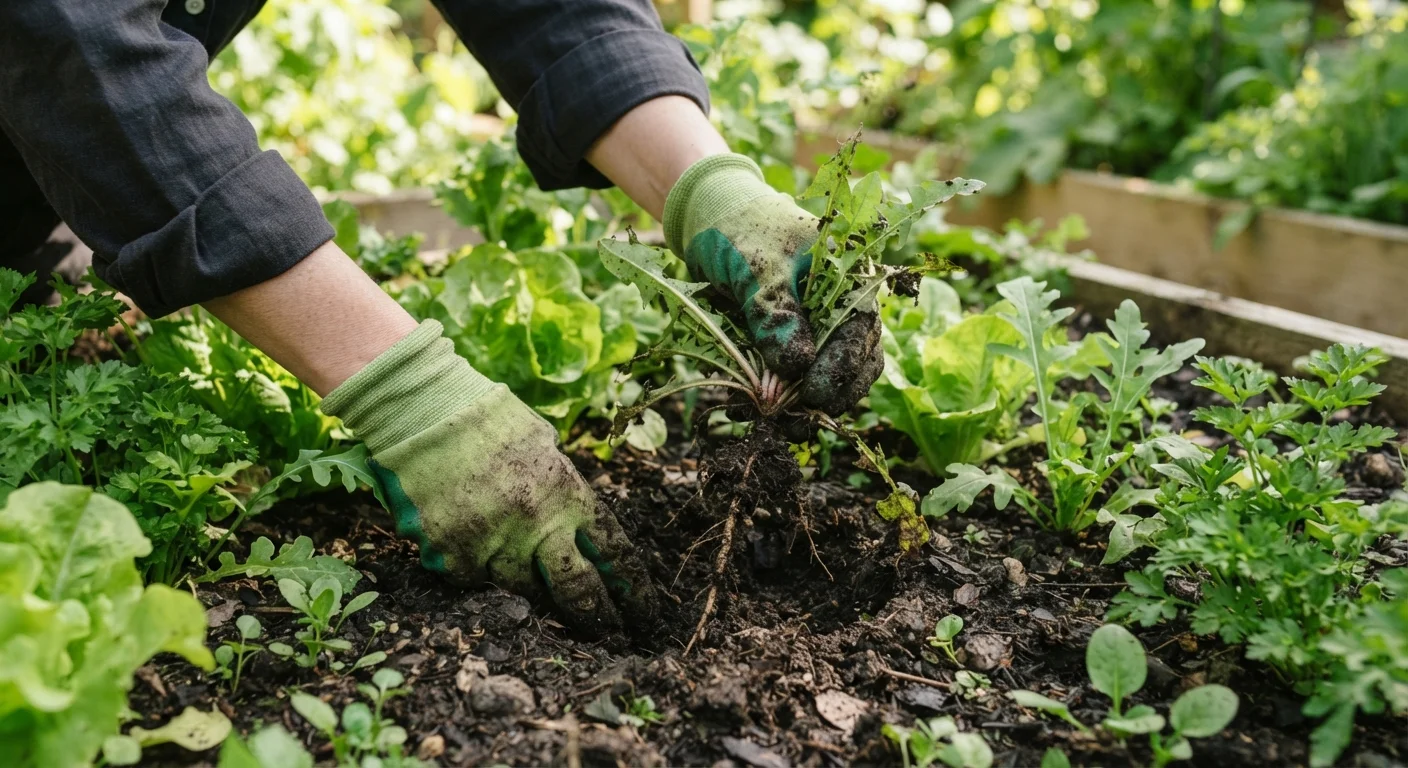
Hand-pulling remains underrated when done at the right time. Young weeds with shallow roots come out cleanly after rain or watering. Waiting until weeds are established - especially tap-rooted species like dandelions - dramatically increases the effort required and the likelihood of root fragments left behind to regrow.
Solarization (covering bare soil with clear plastic for 4-6 weeks in summer) can reduce weed seed banks in the top few inches of soil by generating heat. It works best in climates with intense summer sun and requires the bed to be out of production for the treatment period. It's not a quick fix, but it's a legitimate tool for preparing a new bed.
Don't Assume 'Natural' Means Safe for All Plants
Boiling water, high-concentration vinegar, and salt are often described as natural alternatives, but all three can cause significant collateral damage to desirable plants, soil biology, or both. Before applying any contact treatment near garden beds, consider how close your target weed is to plant roots and whether the treatment can travel through soil. When in doubt, hand-pulling is the lowest-risk option for mixed plantings.
If you're evaluating your whole yard setup, understanding how your garden structure affects long-term weed pressure is worth the time - our comparison of raised beds versus in-ground planting covers how each approach handles weed management differently. Similarly, converting lawn areas to native plants or lawn alternatives can reduce the bare soil that weeds colonize most aggressively.