

Key Takeaways
Summary
24 items · 45-90 minutes
Why Auditing First Saves Money
The impulse is understandable: the closet is chaotic, the kitchen counter won't clear, so you head out and buy more storage bins. But in most homes, the problem isn't a shortage of containers - it's an excess of stuff stored without a system. New bins added on top of that chaos just create more organized-looking clutter.
A room-by-room audit interrupts that cycle. It forces you to see exactly what's in each space, what belongs there, and what's simply taking up room. Think of it the same way a pantry-first grocery approach works: knowing what you already have before you buy more prevents redundant spending.
Use this checklist before purchasing a single new storage product. When you're done, you'll have a clear, room-specific picture of what your home actually needs - and a much shorter shopping list.
Notepad or Notes App
Record observations, items to purge, and gaps identified in each room as you walk through.
Labeling Tape and Marker
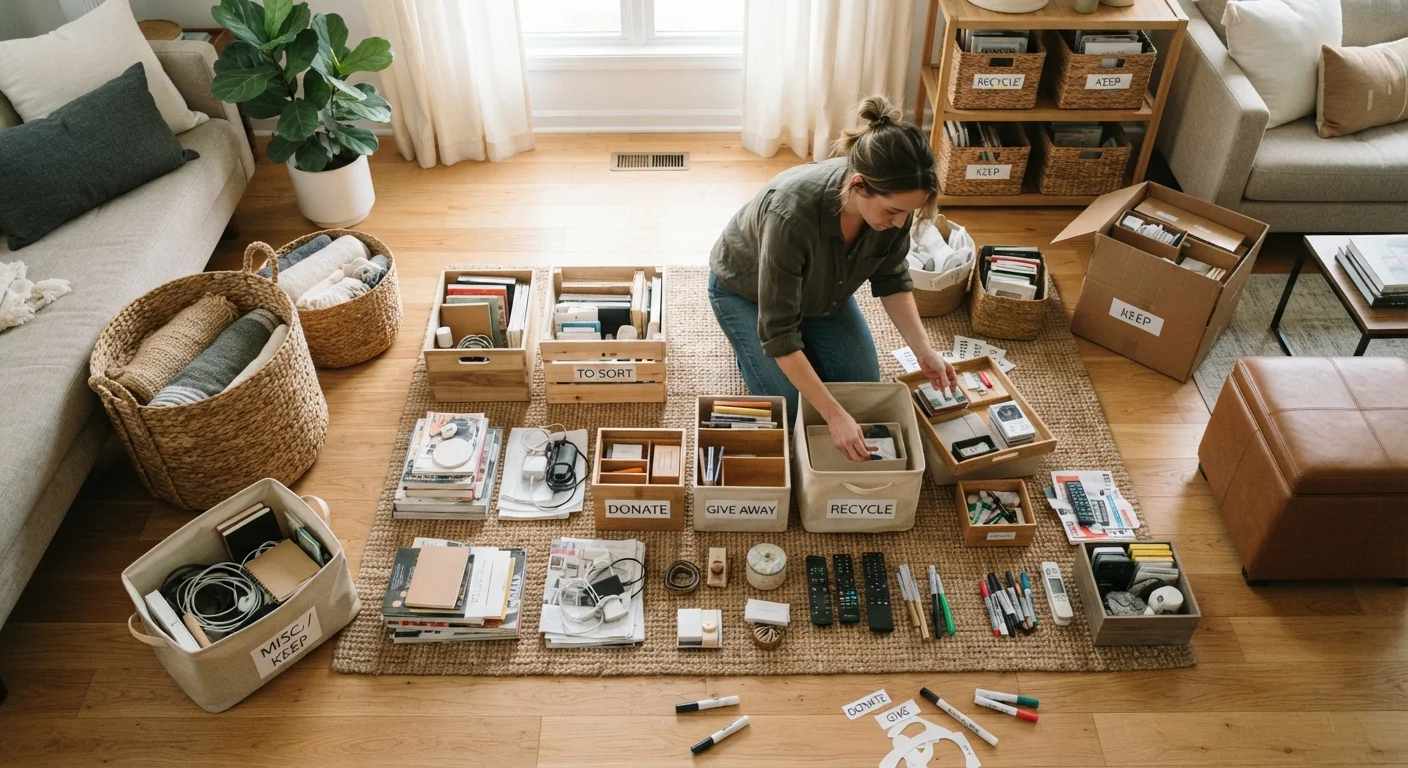
Temporarily label boxes or bags as Purge, Relocate, and Keep to keep items sorted during the audit.
Tape Measure
Measure shelf depths, cabinet interiors, and floor spaces so any future storage purchase fits exactly.
Smartphone Camera
Photograph the current state of each room before and after for reference and progress tracking.
How to Use This Checklist
Work through one room at a time. You don't need to complete the full audit in a single session - tackling one or two rooms per day is more sustainable and produces better decisions than rushing through everything at once.
For each room, you're answering three core questions: What's here? Does it belong here? Is there a better way to store it? Before you reach any conclusion about needing new products, check whether items you already own - boxes, jars, trays, hooks - could serve the same function. Our guide to repurposing everyday household items shows how far common household objects can stretch.
Don't Organize Before You Purge
Putting things into bins before deciding what to keep is one of the most common organizing mistakes. You end up with neatly stored items you don't need, which means you'll eventually have to redo the work. Always complete the Purge and Relocate steps for a room before deciding whether any storage product is actually needed.
If you discover your clutter problem is more about volume than organization, start with the no-cost decluttering methods outlined in our companion guide before continuing this audit.
Room-by-Room Audit Checklist
Work through each group below with a notepad or your phone open to take notes. Mark items you need to act on, and at the end, compile a single master action list before considering any purchases.
Before You Start Any Room
Kitchen
Living Room & Common Areas
Bedroom & Closets
Bathroom
Garage, Laundry Room & Utility Spaces
Final Review
Once you've completed every room, review your notes. Separate actions into three buckets: purge (donate, discard, or sell), relocate (move to a more logical room), and organize with what you have. Only items that remain unresolved after those three steps justify a new purchase.
For bathrooms specifically, space constraints often require creative vertical solutions - see our bathroom organization strategies guide for approaches tailored to tight square footage.
Turning Your Audit Into a Plan
A completed audit should leave you with a short, specific list - not a vague sense that you need "more organization." If you've identified that your hall closet needs a shelf riser and your kitchen drawer needs dividers, those are targeted, low-cost purchases with a clear purpose. That's a very different outcome from buying a 10-pack of assorted bins and hoping for the best.
To prevent clutter from quietly rebuilding after your audit, pair this exercise with simple daily habits. The one-in, one-out rule and related habits can make your audit results last significantly longer without requiring ongoing effort.
Finally, keep a record of what you audited and when. Revisiting each room every six months or so - especially after seasonal changeovers - keeps the process manageable and prevents any single space from sliding back into chaos.