

Key Takeaways
Why Categorizing Before Buying Changes Everything
Most financial regret doesn't come from large, deliberate purchases - it comes from the accumulation of small, uncategorized ones. The item felt justified in the moment, but there was no structured test applied before the card was swiped. A tiered decision framework closes that gap.
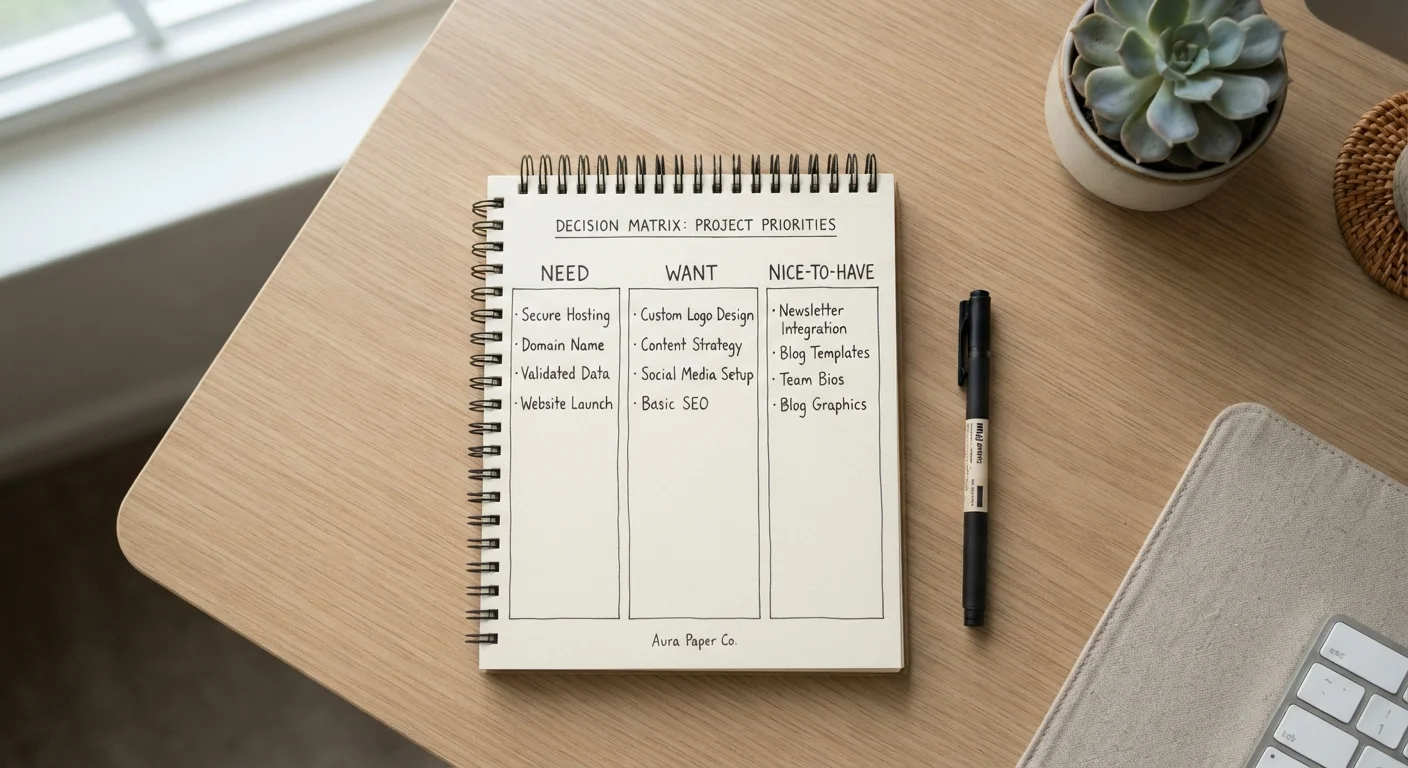
The three-tier model - Need, Want, and Nice-to-Have - forces a brief but productive pause. That pause is the mechanism. It pulls the decision out of emotional context (a sale notification, a social media ad, a store display) and into rational context (your actual budget and current circumstances).
This isn't about deprivation. It's about deliberate spending. Wants and Nice-to-Haves can and should make it into your cart - but only after they've cleared a conscious gate, not an impulsive one. For a broader system-level approach, starting with a structured shopping system is worth reviewing before layering in any decision framework.
Defining Each Tier Honestly
The framework only works if you apply consistent, honest definitions - not definitions that conveniently justify whatever you're already leaning toward.
Need
A Need solves an active, concrete problem that affects your health, safety, work, or a critical household function right now. A car that won't start is a need. Replacing a furnace that's failed in January is a need. The key qualifier is immediacy and consequence: what happens if you don't buy this in the next week or two? If the answer is significant disruption, it's likely a Need.
Want
A Want improves your life in a meaningful but non-urgent way. You could continue without it, but buying it makes sense if the timing and budget are right. A second monitor for a remote-work setup is a Want. A quality winter coat when yours is still functional but worn is a Want. Wants deserve to be purchased - just with a timing check. See the framework for deciding between waiting and buying now before committing.
Nice-to-Have
A Nice-to-Have would be pleasant but creates no real gap in your life if absent. It's often triggered by novelty, comparison, or a perceived deal rather than genuine utility. Recognizing this tier is where most budget savings accumulate, because Nice-to-Haves are disproportionately common in impulse-purchase scenarios.
Categories Shift With Circumstances
A purchase that's a Nice-to-Have today can become a genuine Need in three months. The tier system is a snapshot, not a permanent classification. Revisit items on your wishlist periodically - context changes, and so should your assessment. This is also why a running list is more useful than a one-time decision.
Best Practices for Applying the Framework
Knowing the tiers is step one. Consistently applying them - especially under purchase pressure - is where the discipline actually lives.
Apply the tier test before you search, not after you've already fallen in love with a product.
Once you've researched a specific item extensively, confirmation bias makes it much harder to classify it honestly. Categorizing the purchase type before browsing keeps the assessment neutral and prevents rationalization.
Assign a mandatory waiting period based on tier: 24 hours for Wants, 7 days for Nice-to-Haves.
Time is the most reliable filter for impulse purchases. Desire that survives 24-72 hours is more likely to reflect genuine utility, while impulse-driven interest typically fades within hours. Nice-to-Haves benefit from a longer window because the stakes of misclassification are lower.
Test Needs against the 'functional alternative' question before spending.
Even genuine Needs often have lower-cost functional alternatives that satisfy the core requirement. Skipping this check leads to over-spending on Needs, which can crowd out legitimate Wants.
Keep a running Nice-to-Have list rather than buying immediately.
Nice-to-Haves compete with each other over time. A running list forces prioritization - when budget opens up, you pick the highest-value item from the list rather than whatever happens to be in front of you at a given moment.
Re-evaluate tier classification when a sale or deal appears.
Promotions create psychological pressure to reclassify items upward - a Nice-to-Have suddenly feels like a Need because the price dropped. Recognizing this pattern prevents deals from overriding the framework. A discount on something you don't need is still money spent unnecessarily.
Use the framework across all spending categories, not just big purchases.
Small purchases bypass scrutiny because the individual cost feels trivial, but their cumulative impact is substantial. Applying the tier test consistently - including to $10-$30 purchases - builds the habit and catches category drift.
Quick Actions You Can Take Right Now
The framework is most effective when it becomes a reflex rather than an occasional exercise. These quick-start actions help build that habit.
Once the framework is internalized, it integrates naturally into broader pre-purchase discipline. The pre-purchase decision checklist extends this tier approach into a full review process for any non-essential purchase. For large purchases specifically, the pre-buy timing checklist adds a timing layer on top of the category test.
This article is for general informational purposes only and does not constitute personalized financial advice. Consult a qualified financial professional for guidance specific to your situation.