

Key Takeaways
Late-Summer Pricing Window
The late-summer pricing window refers to the period - roughly mid-July through September - when outdoor and garden furniture prices tend to drop significantly. Retailers need to clear seasonal inventory before fall merchandise arrives, which creates predictable markdown cycles that informed shoppers can take advantage of.
This window is driven by retail inventory management: floor space and warehouse capacity are finite, and carrying costs incentivize merchants to liquidate slow-moving seasonal stock at progressively steeper discounts as the season ends.
Why Retailers Mark Down Outdoor Furniture in Late Summer
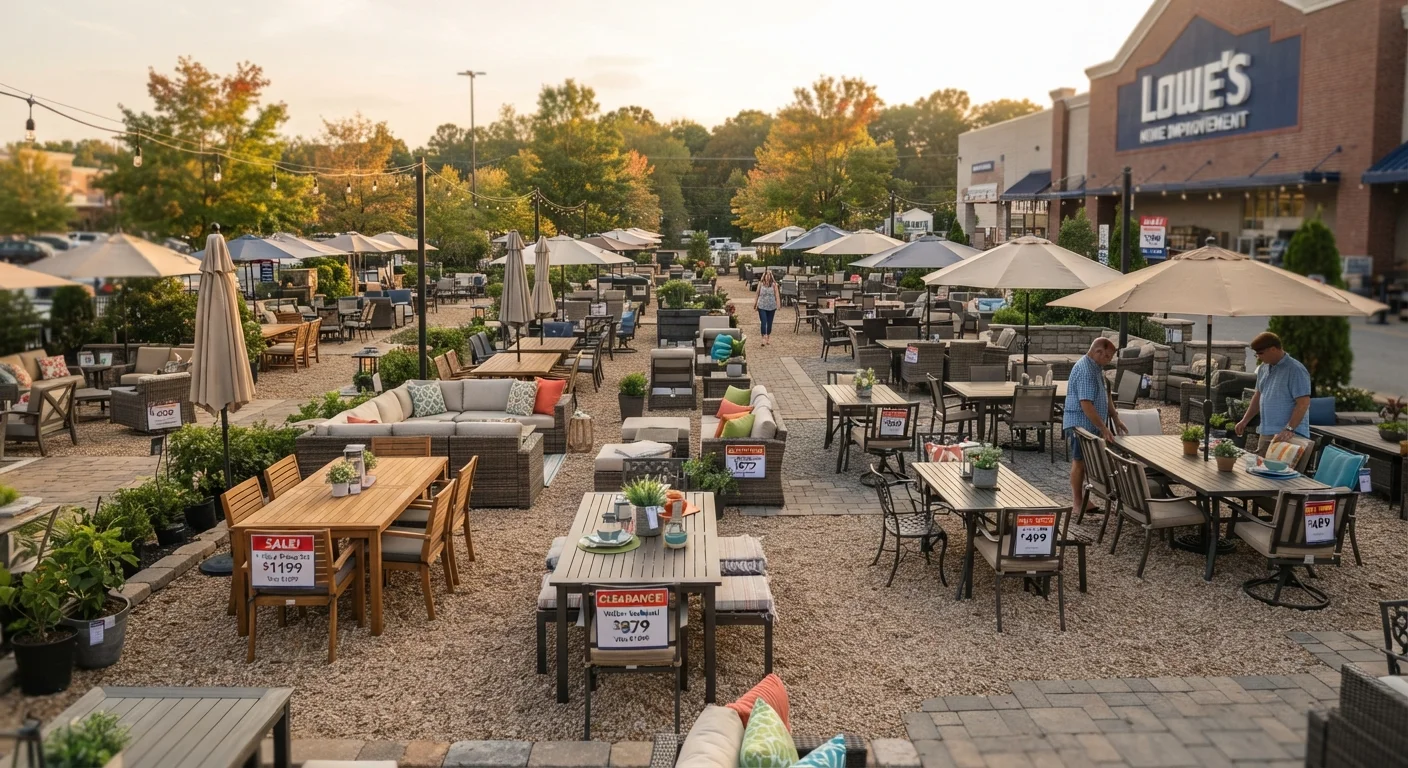
Outdoor furniture is a textbook seasonal category. Retailers place inventory orders months in advance, stock shelves for spring and early summer demand, and then face a hard deadline: fall merchandise needs that floor space. Unlike apparel, patio sets and garden chairs can't simply be folded onto a back rack. They're bulky, expensive to warehouse, and have virtually zero demand once temperatures drop.
That pressure creates a predictable markdown cycle. As the annual retail pricing calendar shows, seasonal categories follow reliable patterns tied to inventory reality, not arbitrary promotions. For outdoor furniture, the math is straightforward: carrying unsold stock into fall costs the retailer more than selling it at a steep discount now.
The result is a window - generally mid-July through September - where markdowns progress from modest to substantial. Early in the window, you'll see 20-30% reductions. By late August and September, clearance pricing often goes deeper, particularly on large sets and coordinating accessories.
Mid-July-Sept
Typical outdoor furniture markdown window
Retail inventory pressure from incoming fall merchandise generally triggers outdoor category clearance during this period each year.
30-50%
Reported clearance discount range
Clearance markdowns on seasonal outdoor furniture commonly reach this range during peak late-summer inventory reduction, though individual results vary by retailer and item.
Months ahead
Lead time retailers use for inventory orders
Because retailers commit to inventory well before the selling season, they face fixed carrying costs that make late-season liquidation financially necessary.
How to Navigate the Window Without Overpaying or Missing Out
The late-summer window involves a genuine trade-off: the longer you wait, the steeper the potential discount - but also the thinner the selection. Complete matching sets disappear first. Individual chairs and accent pieces tend to linger. If your priority is a coordinated look, act earlier in the window; if you're flexible on style, waiting typically yields better pricing.
A few practical considerations help structure the decision:
- Storage capacity: Buying furniture in August means storing it until next spring. Confirm you have a dry, covered space before committing to a purchase driven purely by timing.
- Next-season planning: If you're furnishing a space you'll use heavily, buying now lets you research and compare without the spring-rush urgency that often leads to impulse decisions at full price.
- Condition checks: Floor models are common in clearance cycles. Inspect welds, frame joints, and fabric integrity before purchasing - cosmetic markdowns on damaged goods aren't savings.
Inspect Before You Commit on Floor Models
Clearance cycles frequently include display units that have been handled repeatedly on a showroom floor. Check all frame joints, test any mechanical components (recliners, adjustable pieces), and examine fabric for fading or tears before purchasing. A meaningful discount loses its value if the piece requires immediate repair.
This approach is part of a broader strategy of timing purchases around seasonal price cycles, which applies across categories from appliances to apparel.
Comparing Late Summer to Other Furniture Buying Windows
Late summer isn't the only time furniture prices soften, but it is one of the most category-specific windows available. January furniture markdowns are real, but they're driven by post-holiday inventory resets across general home furnishings - not the seasonal urgency that makes outdoor categories particularly price-sensitive in late summer.
Holiday weekend sales (Memorial Day, Labor Day) generate promotional activity, but they don't always represent the deepest markdowns. As research into holiday versus off-season buying suggests, off-season clearance tends to beat holiday promotions precisely because retailer motivation is higher - they need to move product, not just attract foot traffic.
The parallel in apparel is instructive: buying winter clothing in February follows the same logic. When a category's selling season ends, retailer urgency rises and prices follow. Outdoor furniture in late summer operates by the same mechanism.
For shoppers interested in the broader landscape of garden and lawn care costs, timing large purchases like furniture within these windows is one of the more reliable ways to reduce annual spending without sacrificing quality.