

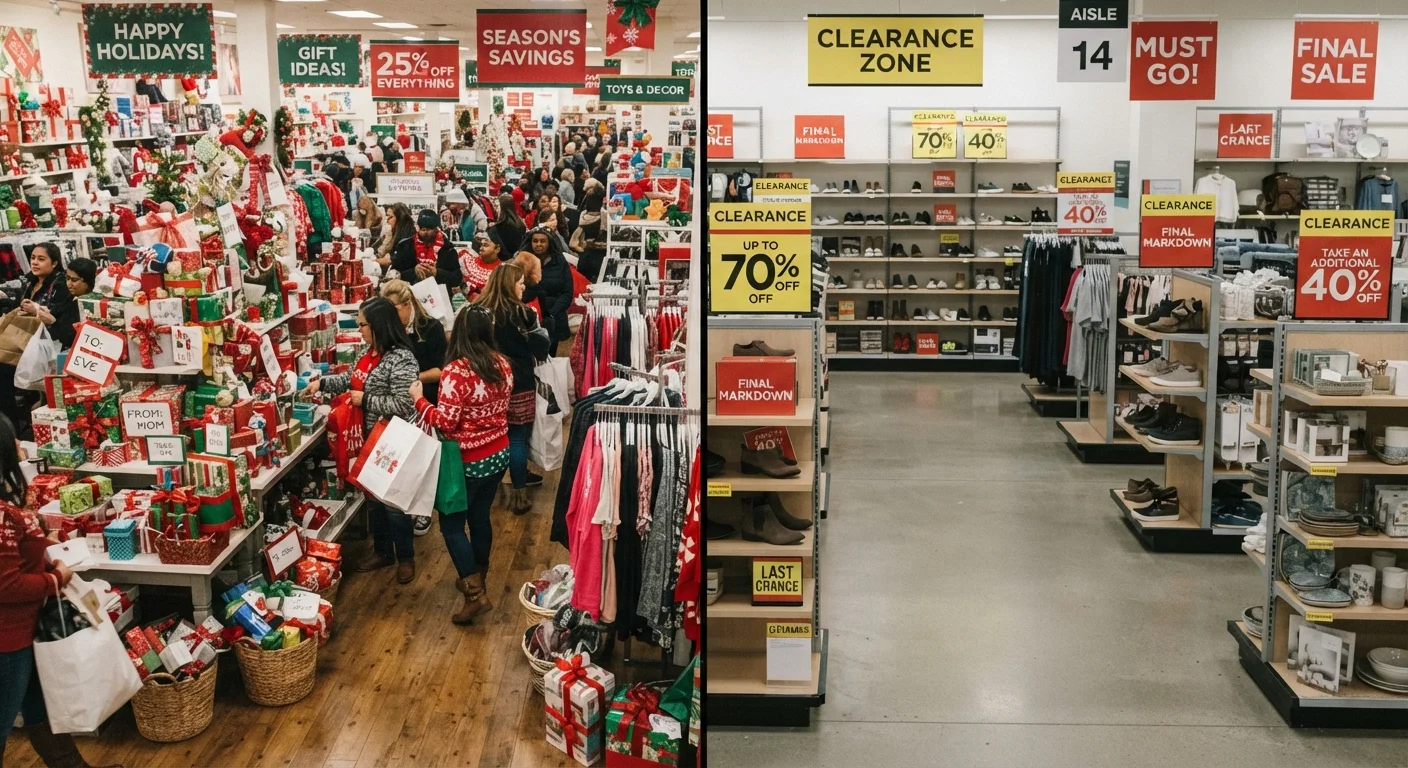
Key Takeaways
Option A
Holiday Sales Windows
The high-visibility, high-competition shopping moment.
Best for: Shoppers with flexible budgets who need items immediately and can navigate crowded sales events.
Option B
Off-Season Buying Windows
The quieter, often deeper-discount alternative.
Best for: Patient shoppers who can plan ahead and are willing to buy out of peak demand to maximize savings.
If you need a major appliance right now and can't wait
Holiday Sales Windows
Holiday weekends like Labor Day and Black Friday generate competitive appliance pricing. While not always the deepest discounts, deals are real and inventory is available. See appliance price patterns for context.
If you're buying seasonal items like outdoor furniture or winter clothing
Off-Season Buying Windows
End-of-season clearances on these categories routinely outperform holiday promotions. Retailers must move the inventory regardless of demand.
If you're shopping for consumer electronics
Off-Season Buying Windows
Post-holiday Q1 price drops on electronics are well-documented as retailers manage overstock. Holiday pricing often reflects demand, not retailer generosity.
If you're buying gifts and cannot be flexible on timing
Holiday Sales Windows
When the purchase date is fixed by occasion, holiday sales are your best lever. Stack cashback portals and promo codes to extend savings.
If you're a budget-focused planner with a 2-3 month purchase horizon
Off-Season Buying Windows
Planned off-season buying consistently delivers better price-to-value outcomes across most durable goods categories when you can absorb the wait.
How Each Approach Actually Works
Holiday sales - Black Friday, Cyber Monday, Memorial Day, Labor Day - are engineered retail events. Retailers plan promotions months in advance, often anchoring "sale" prices against inflated reference prices. The discounts are real on select items, but the environment favors the retailer: urgency, scarcity messaging, and high traffic all reduce the likelihood of comparison shopping.
Off-season buying works on a different mechanic. When seasonal demand drops - patio furniture in September, winter coats in February, lawn mowers in October - retailers face a carrying-cost problem. Unsold inventory ties up capital and floor space needed for incoming stock. That pressure produces markdowns driven by necessity, not marketing calendars. For a detailed breakdown of which categories drop when and why, see the annual price calendar.
| Criterion | Holiday Sales Windows | Off-Season Buying Windows |
|---|---|---|
| Typical discount depth | 20-40% on promoted items | 30-70% on clearance items |
| Price anchoring risk | Higher - reference prices often inflated | Lower - markdowns from last active retail price |
| Inventory availability | Broad but competitive and limited | Narrower selection, less competition |
| Coupon/cashback stacking | Often restricted by sale terms | Generally easier to stack |
| Planning lead time required | Days to weeks | Weeks to months |
| Best product categories | Electronics, appliances, toys | Apparel, outdoor/seasonal goods, furniture |
| Retailer motivation | Drive traffic and revenue | Clear inventory and reduce carrying costs |
Category-by-Category: Where Each Approach Has the Edge
Apparel: Holiday sales offer doorbusters, but end-of-season clearances in January-February (winter) and July-August (summer) typically run 50-70% off original retail - deeper than most holiday events. Late-winter apparel clearances are a particularly strong off-season window.
Electronics: Black Friday is legitimate for TVs and laptops, but post-holiday Q1 price shifts on consumer electronics often exceed what holiday promotions delivered, as retailers and manufacturers manage excess inventory.
Outdoor furniture and garden: This is off-season territory almost unconditionally. Late-summer pricing windows for outdoor furniture reflect genuine inventory pressure, not promotional theater.
Furniture (indoor): January is historically one of the strongest months for furniture, as post-holiday clearances and new floor model arrivals converge.
~30%
Typical holiday discount on promoted electronics
Industry analysts broadly estimate holiday electronics promotions average around 25-35% off, though individual deals vary significantly by product and retailer.
50-70%
Common off-season apparel clearance range
End-of-season apparel markdowns frequently reach this range as retailers clear seasonal inventory ahead of new collection arrivals.
4-8 weeks
Recommended planning horizon for off-season buys
Tracking prices and setting purchase intent 4-8 weeks before a known off-season window gives shoppers time to compare and stack savings methods.
Stacking Strategies That Work in Both Windows
Regardless of which timing approach fits your category, the mechanics of savings stacking apply equally. Cashback portals, promo codes, and store credit cards can all be layered on top of either a holiday promotion or an off-season markdown. The key difference: off-season windows are less likely to restrict stacking, since retailers aren't running coordinated promotional campaigns that exclude third-party codes.
For a practical framework on building your purchase timing around predictable price drops, a personal shopping calendar is worth building before you need to buy. And if you're not yet maximizing cashback and coupons on top of these windows, the coupons and cashback hub covers the mechanics. Understanding how retailers cycle clearance inventory also helps you anticipate markdowns before they're advertised rather than reacting after the fact.
The broader principle - matching purchase timing to retail logic rather than marketing buzz - sits at the core of budget buying strategy and is worth applying systematically rather than category by category.