

Key Takeaways
Option A
Whole Foods
The nutritionally dense, minimally altered choice.
Best for: People prioritizing nutrient density and willing to invest time in meal preparation.
Option B
Processed Foods
The convenient, widely accessible, but highly variable option.
Best for: Busy households seeking convenience, though quality varies significantly by processing level.
If you want maximum nutrient density per calorie
Whole Foods
Whole foods preserve fiber, micronutrients, and phytonutrients largely intact, offering more nutrition per calorie compared to most heavily processed alternatives.
If you need affordable, shelf-stable nutrition staples
Processed Foods
Minimally processed options like canned legumes, frozen produce, and whole-grain cereals deliver solid nutrition at low cost and long shelf life.
If you're managing sodium or added sugar intake
Whole Foods
Whole foods contain naturally occurring sugars and negligible sodium, making portion and intake management more straightforward.
If time and cooking access are limited
Processed Foods
Minimally processed ready foods reduce preparation barriers, making consistent eating more realistic for people with limited kitchen access or time.
What Do These Terms Actually Mean?
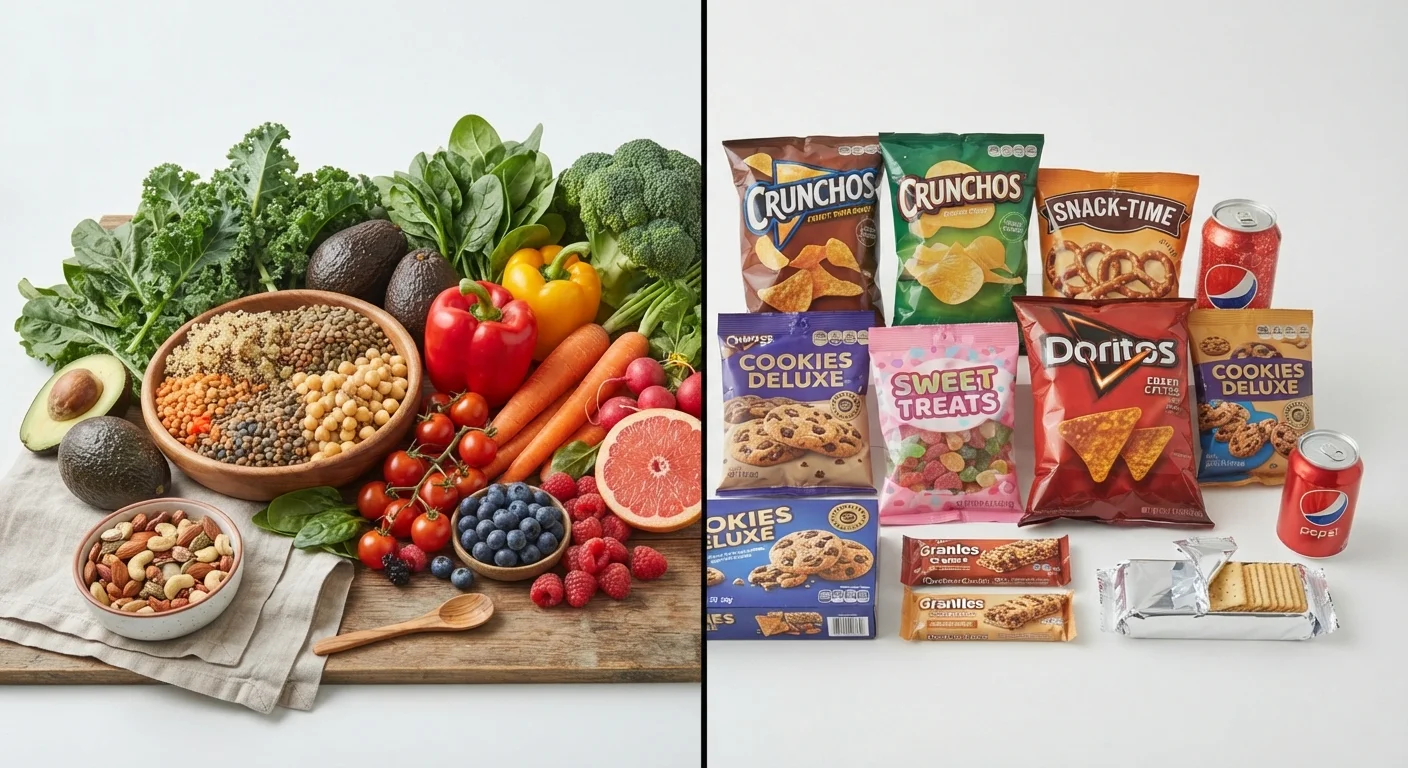
The phrase "whole foods" refers to items that are consumed close to their natural state - think dried lentils, raw oats, fresh spinach, or a hard-boiled egg. They undergo little to no processing before reaching your plate. "Processed foods," by contrast, span an enormous range: from canned tomatoes and frozen peas to chips, breakfast pastries, and fast-food meals engineered with dozens of additives.
Food scientists commonly use a classification system called the NOVA framework, which groups foods by degree of industrial processing into four tiers - from unprocessed and minimally processed at one end to ultra-processed at the other. Understanding where a food falls on this spectrum matters far more than a simple whole-vs.-processed binary. A can of chickpeas in water is technically processed, but nutritionally it closely mirrors dried chickpeas you cook yourself. A flavored corn chip, however, has been significantly reformulated from any whole food source.
The NOVA Classification System Explained
Developed by researchers at the University of São Paulo, the NOVA framework categorizes foods into four groups based on the extent of industrial processing - not nutrient content alone. Group 1 includes unprocessed or minimally processed foods; Group 4 covers ultra-processed products formulated with industrial ingredients rarely used in home cooking. This framework is widely cited in public health nutrition research, though it is not the only lens through which food quality is evaluated.
The Nutritional Trade-Offs, Side by Side
When comparing these two categories, several consistent patterns emerge from nutritional science research.
| Criterion | Whole Foods | Processed Foods |
|---|---|---|
| Fiber content | Naturally high; intact | Often stripped; varies by product |
| Micronutrient retention | Generally well-preserved | Can be reduced; sometimes fortified |
| Added sugars | Absent or negligible | Frequently added, especially ultra-processed |
| Sodium levels | Naturally low | Often high, especially packaged meals |
| Cost per serving | Low to moderate (staples); high (specialty) | Low to moderate; varies widely |
| Shelf life | Short (fresh); longer (dried/frozen) | Generally long due to preservatives |
| Preparation time | Often requires more cooking | Typically quick and convenient |
Whole foods tend to retain their full matrix of nutrients - fiber slows digestion, vitamins remain intact, and naturally occurring compounds called phytochemicals may support long-term health. Heavy processing frequently strips fiber and micronutrients during refinement, then adds back sodium, sugar, or saturated fat to restore palatability.
That said, certain processed foods improve nutritional access. Fortified cereals deliver iron and B vitamins to populations who might otherwise lack them. Canned salmon offers omega-3 fatty acids at a fraction of the cost of fresh fish. For a deeper look at how produce form affects nutrient content, see our comparison of frozen, fresh, and canned produce.
Cost, Access, and the Budget Reality
One of the most persistent myths in nutrition is that eating whole foods is automatically more expensive. In practice, the most affordable items per serving on grocery shelves - dried beans, lentils, oats, eggs, frozen vegetables, and brown rice - are either whole foods or minimally processed. These staples deliver strong nutrient profiles without the premium price of specialty health foods.
Ultra-processed foods are often cheap per calorie but less efficient nutritionally, meaning you may need to eat more to feel satisfied, which can offset the initial cost advantage. For a closer look at which affordable staples deliver the most nutrition, explore nutritious foods available for under a dollar per serving.
Budget constraints are real, and dismissing processed foods entirely is neither practical nor necessary. The more actionable goal is to anchor your diet in minimally processed staples while limiting ultra-processed items high in sodium and added sugars. Understanding the difference starts with the label - learning to read nutrition labels is one of the most practical skills for budget-conscious shoppers.
Practical Guidance for Everyday Decisions
Rather than aiming for dietary perfection, consider these evidence-informed principles when navigating the whole-vs.-processed question:
- Check the ingredient list first. A shorter list with recognizable ingredients generally indicates less processing. Ingredients are listed by weight, so if sugar or sodium appears near the top, take note.
- Prioritize fiber. Heavily processed foods typically lose dietary fiber during manufacturing. Choosing options with at least 3 grams of fiber per serving helps retain one of whole food's key nutritional advantages.
- Don't conflate "natural" with "nutritious." Marketing terms like "natural" or "clean" carry no standardized regulatory definition in the U.S. and don't reliably indicate nutritional quality.
- Stock minimally processed staples. Frozen vegetables, canned legumes, plain whole grains, and eggs are shelf-stable, affordable, and nutritionally comparable to their fresh whole food counterparts.
For a broader view of how macro and micronutrients interact in your diet, understanding the difference between macronutrients and micronutrients provides helpful context. And if you're eating on a tight budget and concerned about nutritional gaps, common pitfalls of low-cost diets and how to address them is worth reviewing.
This article is for general informational and educational purposes only and is not a substitute for professional medical or dietary advice. Consult a qualified healthcare provider or registered dietitian for guidance tailored to your individual health needs.