

Key Takeaways
Zone-Based Organization
Zone-based organization is a method of arranging your home by assigning each area a single, clearly defined purpose - such as paying bills, preparing meals, or storing hobby supplies. Instead of tidying by instinct or convenience, you deliberately group related items and activities together. The goal is that everything in a zone belongs to that zone's function, and nothing else lives there.
In space-planning and interior design, this concept is sometimes called 'activity zoning' or 'functional clustering' - the same logic applied in commercial and office environments to improve workflow efficiency.
Why Tidying Without a System Rarely Sticks
Most people tidy reactively - when the kitchen counter gets out of hand, they clear it. When the living room looks chaotic, they restore order. The problem is that without a defined system, items find their way back to whatever surface is nearest and most convenient. Clutter isn't usually a willpower problem; it's a spatial one.
The real driver of clutter is often that spaces lack a committed purpose. When a dining table can also serve as a mail station, a homework desk, and a charging shelf, it reliably becomes all of those things at once. Zone-based organization interrupts that pattern by assigning one function per area - and making that assignment deliberate rather than accidental.
Zones Are Descriptive, Not Prescriptive
Effective zones describe how your household actually behaves, not how a design magazine suggests you should live. A zone that makes sense on paper but conflicts with real daily habits will be abandoned quickly. Start by observing patterns for a few days before committing to any layout changes.
How to Define Zones in Your Home
The starting point isn't a floor plan - it's behavior. Walk through your home and observe where activities actually happen, not where you intended them to happen. If you pay bills at the kitchen table, that's data. If coats always land on the living room armchair, that's data too.
Once you've mapped real behavior, you can make conscious decisions: reinforce useful patterns by formalizing them into zones, or redesign problem areas so that the convenient option and the correct option become the same thing. A dedicated bill-paying zone near an outlet with a small drawer for stamps and envelopes, for example, is easier to maintain than a mental rule about keeping the table clear.
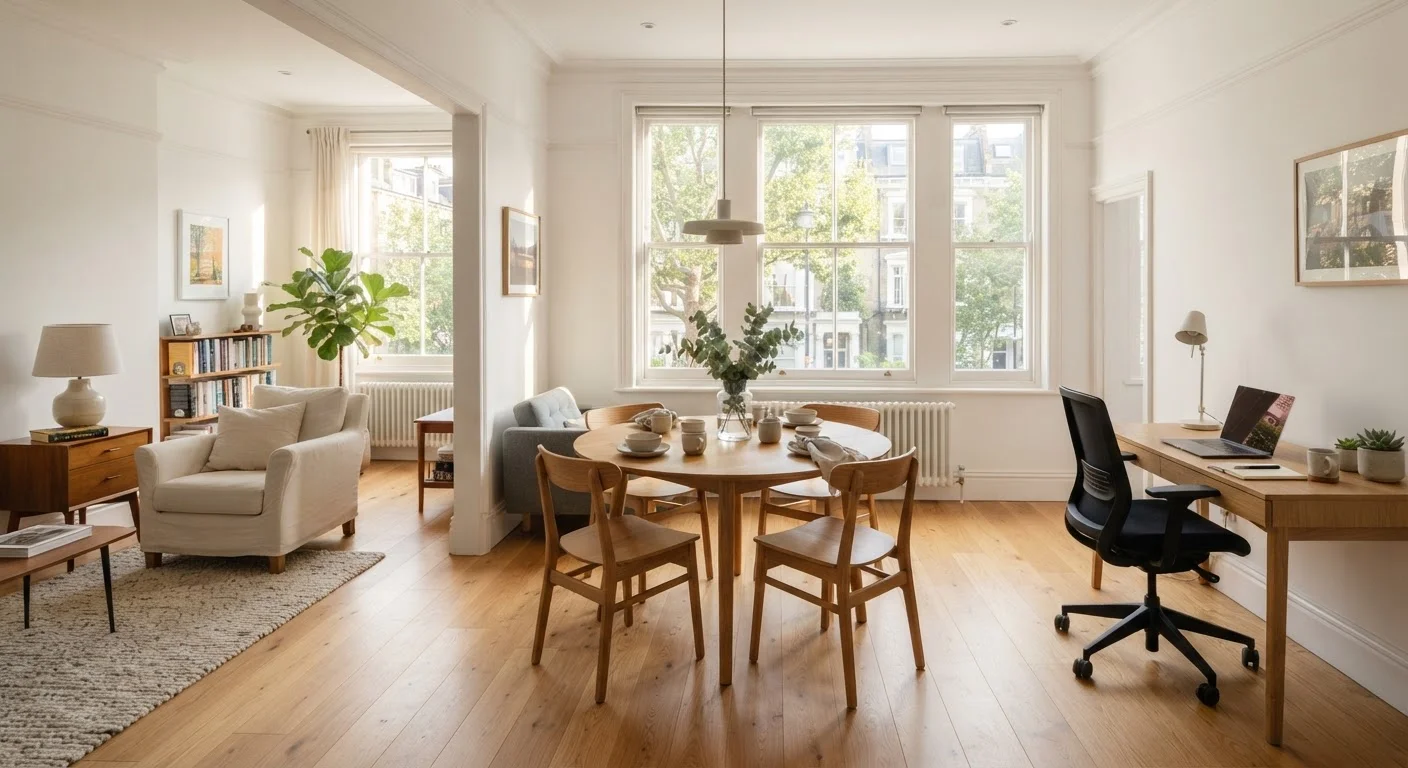
Zones are bounded by function, not necessarily by walls. A reading nook in a bedroom corner is a zone. A charging station on a hallway shelf is a zone. What matters is that items stored there serve that activity exclusively. If non-zone items start accumulating - a zone loses its signal and becomes just another surface.
Label Zones Before Buying Storage
Before purchasing any bins, baskets, or shelving, write down the name and purpose of each zone on paper or a sticky note placed in that area. Live with those labels for a week and see what naturally accumulates. This low-cost step reveals what storage - if any - each zone actually needs, preventing unnecessary spending.
The Budget Case for Zones
Zone-based organization is one of the lowest-cost reorganization strategies available because it requires no new storage products to begin. The method runs on decisions, not purchases. Before buying a single bin or shelf, the work is intellectual: deciding what each area is for and removing what doesn't belong.
This matters for budget-conscious households because the instinct to buy storage often makes clutter worse - more containers create more places to stash things without confronting whether those things are needed. Establishing zones first reveals how much storage you actually require, which tends to be less than assumed. Common organization myths often center on the belief that more storage automatically means less clutter.
When storage additions do make sense - a labeled basket for each child's school items, a pegboard in a craft zone - they slot into a system that already works rather than propping up one that doesn't.
Applying Zones to Specific Situations
Zones scale up and down depending on the room and household. In a shared home, zones reduce friction by making spatial expectations explicit - each person knows where their items belong without ongoing negotiation. See our guide on organizing shared spaces for strategies tailored to multi-person households.
In small or high-traffic rooms, the principle is the same but the boundaries tighten. A bathroom with limited square footage might contain three tight zones: daily personal care near the sink, cleaning supplies under the cabinet, and backup stock on the highest shelf. Our coverage of small bathroom organization applies this logic directly to constrained spaces.
For households downsizing into a smaller home, zone thinking is especially valuable because it forces deliberate trade-offs about what each area must do. Downsizing frameworks that use zone logic tend to produce more livable results than those that focus on item-by-item elimination alone.
Making Zones Last Over Time
The most common reason zones fail isn't poor setup - it's that the household's routines change and the zones don't. A home office zone that works perfectly when one adult works remotely may need reconfiguration when work patterns shift. Plan for two informal reviews per year: reassess whether each zone still matches actual behavior and adjust where it doesn't.
Maintenance is faster when zones are intact. Returning items to a defined zone takes seconds; finding a place for something that belongs nowhere takes much longer and usually results in it landing on a horizontal surface indefinitely. The system creates its own efficiency over time.
91%
of people report their home is not fully organized
According to a survey by the National Association of Professional Organizers, the vast majority of US adults feel their homes lack adequate organizational systems.
40%
of household items are rarely or never used
Research on household consumption patterns consistently finds that a large share of owned items see minimal use, contributing to spatial clutter without serving active needs.
If you use other organization methods alongside zones - such as sorting a closet by category or frequency - they layer in without conflict. Closet organization methods like frequency sorting work especially well inside an already-zoned bedroom because the zone provides the boundary and the sorting method provides the internal order.