

Key Takeaways
Mulch
Mulch is any material spread over the surface of soil to protect and improve it. It slows water evaporation, regulates soil temperature, suppresses weed germination, and - depending on type - can gradually enrich soil as it breaks down. Mulch can be organic (wood chips, straw, compost) or inorganic (rubber, gravel, landscape fabric).
Organic mulches decompose over time through microbial activity, contributing carbon and nutrients to the soil profile; inorganic mulches persist indefinitely but offer no nutritional benefit.
Why Mulch Is One of the Most Efficient Investments in Your Yard
Mulch earns its cost in three measurable ways: it slows soil moisture loss (reducing how often you need to water), it moderates soil temperature so roots aren't stressed by heat or frost swings, and it physically blocks light from reaching weed seeds. Studies from cooperative extension programs across the U.S. consistently show that properly applied mulch can reduce soil moisture evaporation by 25-50%, a meaningful saving in both water bills and time.
Before spending anything, consider what you already have. Shredded autumn leaves, grass clippings (from untreated lawns), and wood chips from tree trimming are all effective organic mulches that many homeowners discard without realizing their value. If you're already thinking carefully about soil inputs, pairing mulch decisions with a soil test helps you understand whether an organic mulch that feeds soil biology is especially important for your specific conditions.
25-50%
Reduction in soil moisture evaporation
Cooperative extension research across multiple U.S. states has found that properly applied mulch can cut evaporation by this range, reducing irrigation needs.
2-4 inches
Recommended organic mulch depth
This is the standard depth range recommended by university extension horticulture programs for effective weed suppression and moisture retention.
1-3 years
Typical lifespan of wood chip mulch
Decomposition rate varies by climate and chip size; coarser chips in drier climates persist longer before needing replenishment.
Organic Mulch Types: What Each One Actually Does
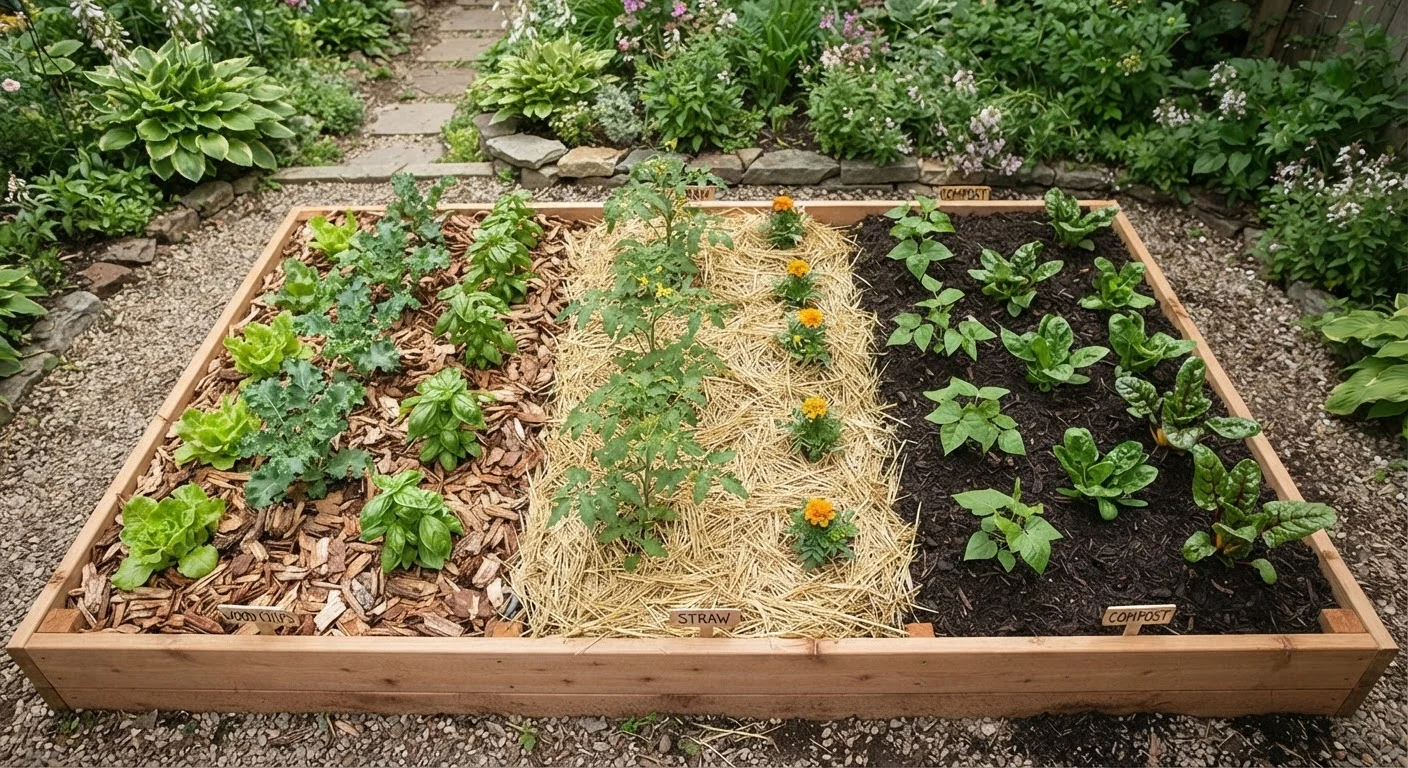
Wood chips and shredded bark are among the most widely available and cost-effective options. They break down slowly (1-3 years), suppress weeds well, and steadily add organic matter. They're best suited to trees, shrubs, and perennial beds. One legitimate concern: fresh wood chips temporarily tie up nitrogen in the soil as they decompose. This is mainly an issue if chips are worked into the soil - left on the surface, the effect is minimal for established plants, but avoid using fresh chips directly in vegetable beds.
Straw (not hay, which contains viable weed seeds) is lightweight, inexpensive, and ideal for vegetable gardens and newly seeded lawn areas. It allows water and air through easily, breaks down in one season, and can be tilled under at season's end. If you're establishing a new lawn, straw is a standard choice for protecting grass seed - you can read more about that in our guide on grass seed vs. sod.
Compost used as mulch feeds soil biology and improves structure, but it breaks down quickly and isn't a strong weed suppressor on its own. It works best as a 1-inch layer under a coarser mulch, or in intensively managed raised beds. See how mulch fits into the broader equation in our raised beds vs. in-ground planting comparison.
Shredded leaves are the most accessible free mulch. Run them through a mower to break them up - whole leaves mat together and repel water. They decompose within one season and are excellent for garden beds and around trees.
Free Wood Chips Are Often Just a Phone Call Away
Many tree-trimming companies and municipal utility crews need to dispose of fresh wood chips and will drop a load at your property for free. Local yard-waste drop-off sites and arborists are also worth contacting. For large mulching projects - covering a new garden bed, a tree ring, or a side yard - this can eliminate the cost entirely compared to bagged products.
Inorganic Mulch Types: Durability vs. Soil Value
Rubber mulch, typically made from recycled tires, is marketed heavily for playgrounds and high-traffic areas because it lasts many years without decomposing. It does suppress weeds and cushions falls. However, it contributes nothing to soil health, can retain heat (which may stress plant roots in hot climates), and is not appropriate for vegetable or edible gardens. Its upfront cost is higher than organic options, and removal down the road is labor-intensive.
Gravel and river rock work well in desert landscapes, around drought-tolerant plants, or in pathways where you want a long-lasting, low-maintenance surface. They allow water through and don't break down, but they also don't improve soil, can make future planting or soil amendments difficult, and store heat - useful in cool climates, problematic in hot ones.
Landscape fabric alone (without mulch on top) breaks down under UV exposure, tends to allow weed roots to interweave with the fabric over time, and is now considered by most extension horticulturists to be less effective than once believed for long-term weed suppression in planted beds. If you're pursuing natural weed management, ground covers that outcompete weeds may serve you better than relying on fabric alone.
Depth, Placement, and Common Mistakes
Getting the depth right matters as much as the type. The standard guideline is 2 to 4 inches for most organic mulches. Going thinner reduces effectiveness; going deeper creates problems - particularly "mulch volcanoes" piled against tree trunks, which trap moisture against bark, encourage rot, and invite pests. Always leave a 2-3 inch gap between mulch and any plant stem or tree trunk.
For newly seeded lawn areas, a thin layer of straw - light enough that you can still see the soil surface - is appropriate. Heavier mulch would smother germinating grass. If you're troubleshooting bare patches in an established lawn, the issue may run deeper than mulch can solve - soil compaction and thatch are often the root cause.
One final point on timing: apply mulch after the soil has warmed in spring, not before. Mulching cold, wet soil traps the chill and delays the growing season. In fall, mulching after the ground begins to freeze - rather than before - protects roots from freeze-thaw cycles without keeping soil artificially cold heading into winter.